
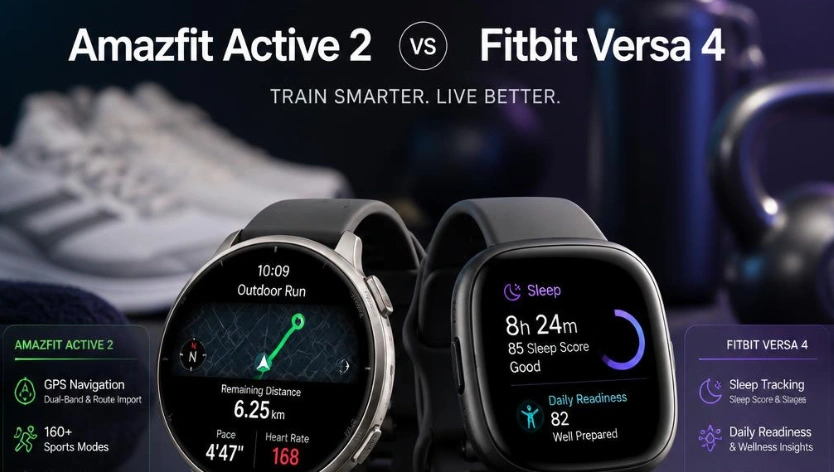
The Amazfit Active 2 and Fitbit Versa 4 target very different smartwatch buyers despite similar pricing. Fitbit focuses more on lifestyle-friendly health tracking and smart features, while Amazfit leans heavily into longer battery life, advanced workout tools, and fitness-first performance. Choosing between them depends on whether you want a casual wellness smartwatch or a more capable training companion.
Introduction
The smartwatch market has shifted dramatically over the past few years. Buyers no longer just want a device that counts steps or mirrors phone notifications — they want accurate fitness tracking, better battery life, recovery insights, GPS precision, and health monitoring that actually feels useful in daily life.
That’s exactly why the Amazfit Active 2 vs Fitbit Versa 4 comparison has become increasingly relevant for budget-conscious smartwatch buyers.
On paper, both watches seem aimed at similar users. They both offer built-in GPS, sleep tracking, heart rate monitoring, workout modes, and modern smartwatch features. But in actual use, they feel surprisingly different.
The Fitbit Versa 4 still appeals to casual users who prioritize simplicity, wellness tracking, and Fitbit’s familiar app ecosystem. Meanwhile, the Amazfit Active 2 feels more like a fitness-focused smartwatch that punches above its price with advanced training tools, downloadable maps, stronger battery life, and more athletic positioning.
This comparison matters because buyers shopping for the best budget fitness smartwatch are no longer choosing between “cheap” devices. They’re choosing between two very different philosophies, smartwatch first convenience or fitness watch first capability.
If you’re trying to decide which fitness watch should you buy in 2026, here’s how these two devices stack up.
Read More: Which Smartwatch Is Better ? Apple Watch SE 3 vs Garmin Forerunner 70
Design & Everyday Experience
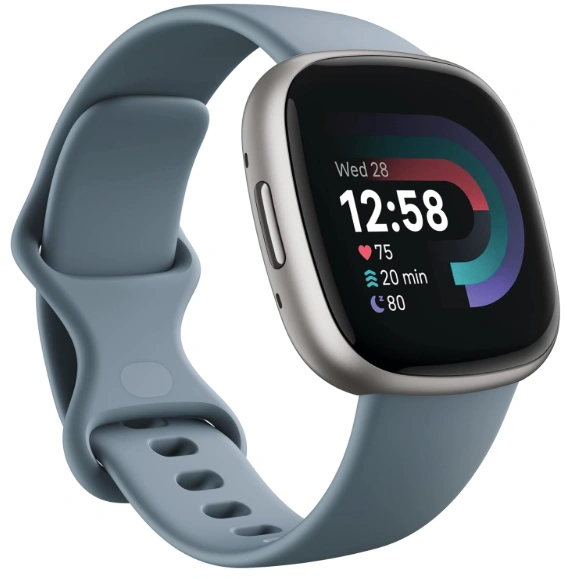
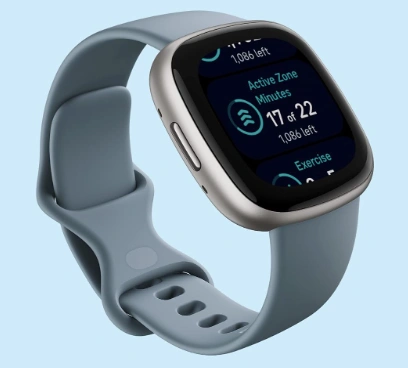
The Fitbit Versa 4 sticks closely to Fitbit’s familiar design language. It’s lightweight, minimal, and easy to wear all day without feeling bulky. Fitbit clearly designed this watch for mainstream users who want something comfortable for workouts but subtle enough for office wear and sleep tracking.
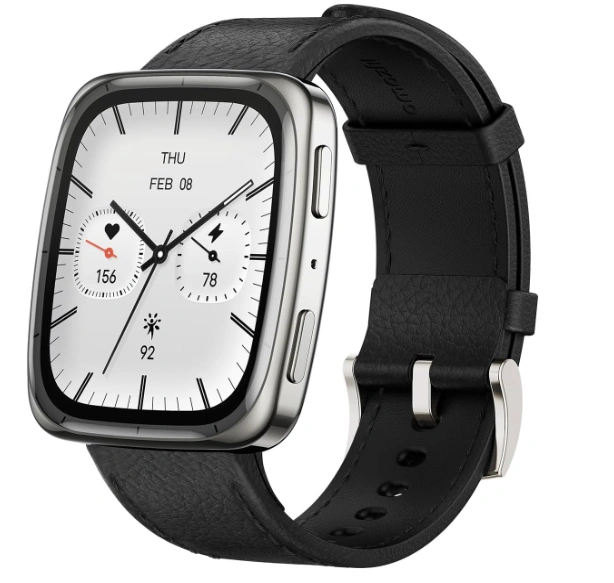
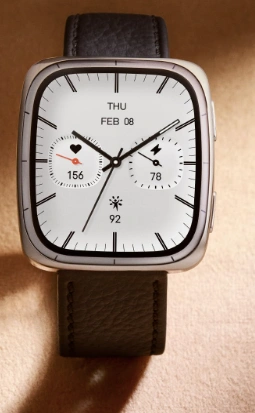
The Amazfit Active 2 feels more premium than its price suggests. The stainless steel frame and sapphire glass immediately give it a more durable, sporty appearance. Compared to many budget smartwatches under $150, it feels less “entry-level” and more performance-oriented.
Display quality is strong on both devices, but the Amazfit Active 2’s brighter AMOLED panel stands out outdoors. The 2,000-nit brightness helps significantly during runs, hikes, or bright summer workouts.
Fitbit’s interface is cleaner and arguably easier for casual users to navigate. Menus feel simpler, health insights are easier to understand, and the Fitbit app remains one of the most beginner-friendly wellness platforms available.
Amazfit, meanwhile, packs far more information into its interface. Serious fitness users may appreciate that, but beginners could initially find the Zepp ecosystem slightly overwhelming compared to Fitbit’s more approachable experience.
Comfort-wise, both watches are lightweight enough for sleep tracking and all-day wear, although runners and gym users may prefer the more secure athletic feel of the Amazfit Active 2.
Check Out: Fitness Trackers For Seniors
Fitness Tracking & Workout Features
This is where the gap between these watches becomes much clearer.
The Fitbit Versa 4 is fundamentally a wellness-focused smartwatch with decent fitness tools layered on top. The Amazfit Active 2, on the other hand, feels designed specifically for active users who care about training data, recovery, and workout depth. For casual walking, gym sessions, and general activity tracking, both watches perform well. Step counts, calorie estimates, and heart rate monitoring are reasonably accurate for everyday users.
But once you move into structured training, the Amazfit Active 2 pulls ahead. It offers over 160 workout modes, advanced running metrics, AI-powered coaching through Zepp Coach, recovery insights, and more detailed training analysis. It feels much closer to entry-level Garmin devices than traditional budget smartwatches.
That’s important because many users looking for a Fitbit Versa 4 alternative are specifically searching for better fitness depth without paying Garmin prices.
GPS accuracy is another major difference.
The Fitbit Versa 4’s GPS works well enough for casual runs and walks, but it occasionally struggles in dense urban areas or under tree cover. The Amazfit Active 2 benefits from support for multiple satellite systems, resulting in more consistent route tracking during outdoor workouts. Battery performance during GPS workouts also favors Amazfit heavily. Long-distance runners, hikers, and cyclists will appreciate the reduced battery anxiety.
Check Out: Apple Watch SE 3 vs Garmin Forerunner 70
The workout experience itself feels more athlete-focused on Amazfit. Features like strength training support, structured workout syncing, and HYROX race tracking give it more credibility among fitness enthusiasts.
Fitbit’s advantage lies in simplicity. The Fitbit app still presents fitness data in a cleaner, easier-to-digest format. Recovery scores, readiness insights, sleep metrics, and wellness trends feel less intimidating for newer users.
This creates a similar divide often seen in Garmin vs Apple Watch discussions.
One side prioritizes lifestyle convenience and simplicity. The other prioritizes training depth and athletic utility. The Amazfit Active 2 leans heavily toward the “fitness watch” side of that equation. If you want a smartwatch primarily for improving running performance, structured training, or endurance workouts, Amazfit delivers better overall value.
If your workouts are more casual and you mainly want encouragement to stay active, Fitbit still makes a lot of sense.
Read More: Top Wearables Under $200 :Best Wearable Deals on Smartwatches and Fitness Trackers
Health Features & Wellness Tracking
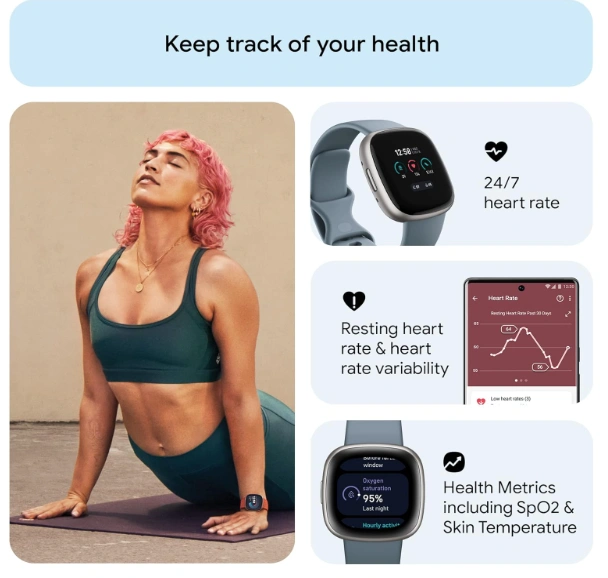
Fitbit remains one of the strongest brands for approachable health tracking. The Versa 4 excels at presenting sleep insights, stress tracking, wellness scores, mindfulness features, and daily readiness metrics in a way that feels useful instead of overwhelming. Sleep tracking remains one of Fitbit’s biggest strengths. Sleep stages, Sleep Score calculations, and personalized wellness insights are easier to understand than many competing platforms.
For users focused on general wellness, recovery, and healthier habits, Fitbit’s ecosystem still feels polished.
The Amazfit Active 2 includes extensive health tracking as well, including continuous heart rate monitoring, SpO2 tracking, sleep analysis, and recovery data through BioTracker technology. However, Amazfit’s approach feels more performance-focused than wellness-focused. Its metrics cater more toward active users who want to optimize training load, recovery timing, and workout efficiency rather than simply tracking overall wellness.
Stress tracking and mindfulness tools are better integrated on Fitbit. Fitbit’s health ecosystem also benefits from years of refinement and broader brand familiarity. That said, Amazfit has improved significantly in recent years, especially in fitness recovery metrics and workout analytics.
If your priority is holistic wellness and sleep tracking, Fitbit still has the edge. If you care more about fitness performance and training feedback, Amazfit offers more depth.
Don’t Miss: Best Smartwatch for Fitness and Style With Discounts
Battery Life Comparison
Battery life is one of the biggest reasons buyers are increasingly considering Amazfit devices over Fitbit. The Fitbit Versa 4 delivers around six days of battery life under normal use, which is decent by smartwatch standards. However, frequent GPS workouts, notifications, and always-on display settings can reduce that figure significantly.
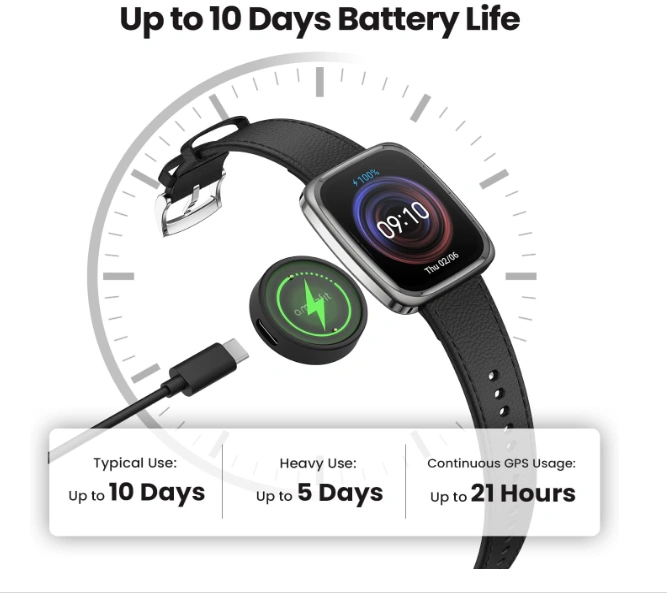
The Amazfit Active 2 comfortably outlasts it. With up to 10 days of regular use and strong GPS endurance, the Active 2 feels far more reliable for travelers, runners, hikers, and users who dislike constant charging.
This becomes especially important during long workouts or multi-day trips. Battery anxiety remains one of the biggest frustrations with modern smartwatches. Users accustomed to Garmin-style endurance often find Fitbit’s charging schedule limiting.
The Amazfit Active 2 vs Versa 4 battery life difference may not seem huge on paper, but in real-world use, charging a watch once every week versus every few days changes the overall ownership experience. For users searching for the smartwatch with best battery life under $150, Amazfit clearly offers the stronger package.
Smart Features & Ecosystem
This is where Fitbit fights back. The Fitbit Versa 4 delivers a more polished smartwatch experience overall. You get Bluetooth calling, voice assistant support through Alexa, Google Wallet integration, phone notifications, and a cleaner app ecosystem. Fitbit also works more naturally for users already invested in Google services.
The Amazfit Active 2 covers the basics well, but its ecosystem still feels more fitness-focused than app-focused. Notifications and smart tools work fine, but they lack the polish of Fitbit’s experience. That said, Amazfit includes some genuinely impressive additions at this price, including downloadable maps and turn-by-turn navigation. For outdoor runners and hikers, that feature alone adds significant value. Compatibility is also worth considering.
Fitbit tends to integrate more smoothly with both Android and iPhone users, while Amazfit occasionally feels more Android-centric in functionality. Music support, mobile payments, and smart assistant features are simply more mature on Fitbit.
So while Amazfit wins the fitness battle, Fitbit still feels like the stronger “everyday smartwatch.”
Read More: Ultimate Fitness Trackers With Automatic Workout Detection & Recovery Analytics
Who Should Buy Fitbit Versa 4?
You should consider the Fitbit Versa 4 if you:
- Want a simple and beginner-friendly fitness smartwatch
- Prioritize sleep tracking and wellness insights
- Prefer a polished smartphone companion
- Want better smart features and app integration
- Mostly track walking, gym workouts, and general activity
- Value Fitbit’s ecosystem and health-focused experience
- Need a lightweight smartwatch for all-day comfort
Who Should Buy Amazfit Active 2?
The Amazfit Active 2 makes more sense if you:
- Want the best budget fitness smartwatch
- Care about battery life and GPS endurance
- Run regularly or train multiple times per week
- Need more advanced workout tracking
- Want downloadable maps and navigation support
- Prefer detailed recovery and training insights
- Need a budget smartwatch with GPS
- Want stronger overall fitness value under $150
Read More:Smart Wearable Technology
Frequently Asked Questions
Is the Amazfit Active 2 more accurate than the Fitbit Versa 4?
For GPS tracking and workout metrics, the Amazfit Active 2 generally performs better, especially during outdoor runs and structured fitness sessions.
Which smartwatch has better battery life? Amazfit Active 2 or Fitbit Versa 4
The Amazfit Active 2 offers significantly longer battery life, lasting up to 10 days compared to roughly 6 days on the Fitbit Versa 4.
Is the Fitbit Versa 4 still worth buying in 2026?
Yes. The Fitbit Versa 4 still makes sense for casual users focused on wellness tracking, sleep monitoring, and smartwatch convenience.
Which is better for running? Amazfit Active 2 or Fitbit Versa 4
The Amazfit Active 2 is better suited for runners thanks to stronger GPS performance, training tools, recovery tracking, and workout depth.
Can the Amazfit Active 2 replace a Garmin watch?
For casual and intermediate runners, it can deliver a surprisingly Garmin-like experience at a much lower price, although serious athletes may still prefer Garmin’s advanced ecosyste
