
Introduction
A fitness tracker once had a relatively simple job. It counted steps, estimated calories, recorded workout sessions, and displayed daily activity totals. For many users, watching those numbers increase throughout the day was enough. But wearable technology has moved beyond basic activity tracking.
Modern smartwatches, fitness bands, smart rings, and connected devices can collect different types of sensor data and use software algorithms to identify patterns. Some also use artificial intelligence (AI) and predictive analytics to turn those measurements into personalized insights about activity, sleep, recovery, and everyday wellness.
Instead of simply showing how many steps someone walked yesterday, a wearable application may compare activity levels over several weeks, identify changes in sleep patterns, or provide a recovery estimate based on recent measurements.
This shift is changing how people interact with wearable technology. The focus is moving from collecting more information to understanding what that information might mean.
AI-powered wearable technology and predictive analytics are becoming important parts of this evolution. However, understanding how these systems work, what they can realistically predict, and where their limitations remain is essential before relying on their insights.
Read More: Smart Wearable for the Future ? Wear It to Believe It
From Data Collection to Intelligent Interpretation
Early fitness trackers primarily focused on recording activity. They measured steps, estimated calories burned, monitored movement, and displayed workout information.
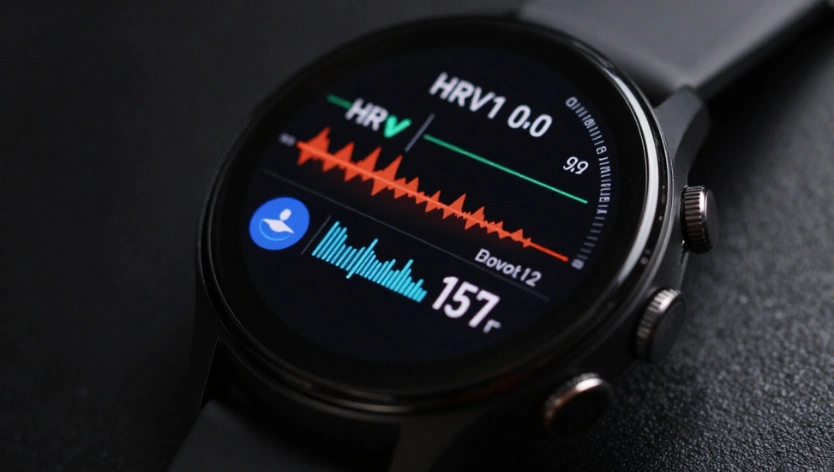
Today’s smart wearables can collect a much broader range of measurements, depending on the device. These may include heart rate, heart rate variability (HRV), skin temperature, movement, sleep estimates, and blood oxygen saturation (SpO₂).
The difference is not simply the amount of data collected. It is how the information is interpreted.
Imagine a fitness tracker recording a user’s resting heart rate every morning. A basic tracker displays the readings. A more advanced application may compare those measurements with the user’s historical baseline and highlight a change that has continued over several days.
It might also present that information alongside sleep duration and recent activity levels.
This is where AI-assisted analysis becomes useful. Rather than treating every measurement as an isolated number, algorithms can examine relationships between different data points and identify trends that may otherwise be difficult to notice.
Research into wearable technology and machine learning is exploring how these measurements can be used to estimate health and performance-related outcomes. However, the quality of predictions depends on the available data, model design, and validation.
Research on wearable technology and machine learning prediction provides further context on the potential and limitations of these approaches.
Check Out: How Wearable Technology Works
What Is AI-Powered Wearable Technology?
AI-powered wearable technology refers to connected devices that use artificial intelligence techniques, including machine learning and pattern recognition, to analyze information collected through sensors.
These devices may include:
- Smartwatches and fitness trackers
- Smart rings
- Health-monitoring wearables
- Smart glasses
- AI-powered earbuds and hearables
- Connected fitness devices
A typical wearable collects information through built-in sensors. Depending on its hardware, these sensors may measure movement, heart rate, temperature, location, or other signals.
The device or its connected application then processes the information. Some analysis takes place directly on the wearable, while other tasks may be handled by a smartphone or cloud-based service.
Over time, algorithms can compare new readings with historical measurements and identify recurring patterns.
For example, an application may notice that a user’s resting heart rate has been consistently higher than their recent baseline. It could present this change alongside sleep and activity information, helping the user understand that several factors may be influencing their recovery.
Not every wearable uses advanced machine learning for every feature. Some rely on simpler calculations, fixed thresholds, or statistical comparisons. The technology behind each feature varies by manufacturer.
Read More: Why It Matters and How to Protect Your Personal Health Data
How Predictive Analytics Works in Smart Wearables
Predictive analytics uses historical and current data to identify patterns and estimate what may happen next. In wearable technology, this process can turn repeated measurements into more meaningful insights.
The process generally involves five stages.
1. Collecting Sensor Data
The first step is gathering information from the wearable’s sensors.
Depending on the device, this may include:
- Heart rate and resting heart rate
- Heart rate variability
- Movement and daily activity
- Sleep duration and estimated sleep stages
- Skin temperature trends
- Workout duration and intensity
- GPS and location information
Not every wearable measures all these signals. The available information depends on its sensors, software, and intended use.
Check Out: Wearable Technology Terminology
2. Establishing Personal Baselines
A single measurement rarely provides a complete picture.
Predictive systems may compare current readings with historical measurements to understand what is typical for an individual.
For example, a particular resting heart rate may be normal for one person but unusual for another. Personal baselines help applications interpret changes in context instead of relying exclusively on general averages.
3. Identifying Patterns and Relationships
Machine-learning algorithms can examine multiple measurements to identify trends and possible relationships.
A wearable application might compare sleep duration, activity levels, resting heart rate, and HRV to explore how changes in daily routines correspond with recovery measurements.
These relationships do not necessarily establish cause and effect. They reveal patterns that may help users understand their habits.
4. Generating Insights and Estimates
After analyzing the available information, the system may generate a recovery score, readiness estimate, activity recommendation, or notification.
For example, an application might suggest reducing workout intensity after several days of limited sleep and increased activity.
The recommendation is based on the available measurements and the algorithm’s design. It should be treated as guidance rather than a definitive assessment of physical condition.
5. Refining Insights Through Continued Use
As users continue wearing their devices, applications may gain access to more historical information.
Some systems use additional measurements to refine personal baselines or adjust recommendations. Others primarily compare current readings with stored trends or receive improvements through software updates.
The way this process works differs between manufacturers. It is not accurate to assume that every wearable continuously learns from its individual user.
Read More: What Is a Wearable Fitness Monitor and How Do You Choose the Right One
Key Applications of AI in Wearable Technology
AI has several potential applications across smart wearables. Fitness, sleep, recovery, and everyday health awareness are among the most visible areas.
AI-Powered Fitness and Activity Tracking
Traditional fitness trackers record steps, distance, workout duration, and estimated calorie expenditure. AI-enabled features can build on this information by identifying activity patterns and providing more personalized feedback.
For example, a wearable application may recognize recurring workout routines, compare activity levels across weeks, or suggest adjustments based on previous training sessions.
Some devices also offer automatic activity recognition. Motion sensors and heart-rate measurements can help identify activities such as walking, running, and cycling. However, detection accuracy varies by device and activity type.
The practical advantage is that users can review broader activity trends instead of focusing only on individual workout results.
Smarter Training Load and Recovery Insights
Training progress depends on more than exercise intensity. Sleep, rest, daily activity, and individual recovery patterns can also influence how someone responds to exercise.
Some wearable platforms combine activity, sleep, and physiological measurements to estimate training load or recovery readiness.
For example, WHOOP uses measurements such as HRV, resting heart rate, sleep, and respiratory rate as part of its recovery assessment. Its official documentation explains how these metrics contribute to the daily Recovery score.Explore how WHOOP calculates its Recovery score.
Garmin devices also offer training and recovery features on supported models, helping users review training load and estimated recovery time.
These features can help users understand how their routines change over time. A lower readiness or recovery score may encourage someone to consider a lighter workout or additional rest.
However, these scores are algorithm-generated estimates. They should not replace professional coaching, medical advice, or attention to how the body feels.
AI-Powered Sleep Tracking
Sleep tracking is another area where AI and data analysis are becoming increasingly relevant.
Depending on the wearable, sleep-monitoring features may use movement, heart rate, HRV, and temperature trends to estimate sleep duration and different sleep stages.
Devices such as the Oura Ring present measurements through sleep summaries, readiness scores, and related wellness insights. Oura explains the measurements used in its readiness calculation in its official readiness score documentation.
The value comes from observing patterns across multiple nights. Users may notice that changes in bedtime, daily activity, or evening routines correspond with differences in their sleep measurements.
However, consumer wearables do not measure sleep in the same way as a clinical sleep study. Sleep-stage readings are estimates, and they should not be used to diagnose sleep disorders.
The American Academy of Sleep Medicine has discussed the limitations of consumer sleep technology and its role in sleep health. Its position statement on consumer sleep technology is a useful reference for understanding why these products should not replace clinical evaluation.
Read More: Wearable Sleep Tracking
Personalized Wellness and Stress Insights
Some wearables use physiological measurements to provide stress-related insights.
These features may examine HRV, heart rate, movement, and other available signals to estimate changes in stress or recovery patterns.
For example, an application may show that a user experienced higher stress-related readings during certain parts of the day. The user can then compare those trends with work schedules, exercise, sleep, or other lifestyle factors.
Some platforms also offer guided breathing exercises, relaxation reminders, or personalized wellness suggestions.
These features can support self-awareness, but a wearable’s stress score is not a direct measurement of emotional state. It is an interpretation of physiological signals.
Explore More: Wearables Smart Home Integration
Predictive Health Monitoring: Potential and Limitations
One of the most discussed applications of AI-powered wearable technology is health monitoring. Some smartwatches and other wearable devices can identify specific changes in recorded measurements and notify users when certain patterns are detected.
For example, supported smartwatch models may offer irregular heart rhythm notifications or other heart-related features. Some devices also provide blood oxygen estimates or temperature-related measurements.
These capabilities can make selected health information more accessible between medical appointments. They may also encourage users to discuss unusual readings with healthcare professionals.
Research is also exploring whether machine-learning models can identify patterns associated with certain health conditions using wearable data. Studies have investigated relationships between sleep, activity, HRV, and mental health indicators.
However, research findings should not be confused with commercially available diagnostic features.
An elevated resting heart rate, a change in HRV, or an unusual sleep pattern can have many possible explanations. AI-generated alerts cannot independently confirm the presence of an illness or medical condition.
The US Food and Drug Administration provides guidance distinguishing certain low-risk general wellness products from products intended for medical purposes. This distinction is useful when evaluating the health claims made by wearable manufacturers.
Read the FDA’s General Wellness Policy for Low Risk Devices.
Wearables should therefore be viewed as tools for monitoring and awareness, not replacements for clinical evaluation.
Explore More: Future of AR Wearables Smart Glasses, Mixed Reality
Why Multiple Sensors Matter
A single sensor provides only part of the picture.
Heart-rate measurements can show changes in cardiovascular activity, while movement sensors record physical activity. Sleep-related measurements may offer additional context about rest and daily routines.
When compatible data points are analyzed together, an application may be able to identify patterns that are not obvious from individual readings.
For example, a wearable platform could compare:
- Changes in resting heart rate
- Recent activity and workout intensity
- Sleep duration and consistency
- HRV trends
- Temperature-related measurements
This combined approach is often described as sensor fusion or multimodal data analysis.
It can provide a broader view of the information collected by a wearable. However, adding more sensors does not automatically guarantee better predictions. The quality of the measurements, algorithm design, and relevance of the data all matter.
A review of consumer wearable measurement accuracy published in Sports Medicine examines how performance can vary across devices and measurement types. Its findings reinforce the importance of understanding what a wearable can reliably measure. Read the review of consumer wearable device accuracy.
Read More: How Wearables Connect With Your Smart Home
The Rise of Intelligent Coaching and Personalized Recommendations
AI-powered wearables are also changing how users receive fitness and wellness recommendations.
Instead of following the same activity target every day, users may receive suggestions based on their recent measurements and recorded habits.
For example:
- A recovery score may suggest considering a lighter training session.
- Activity trends may encourage more movement throughout the day.
- Sleep summaries may highlight inconsistent bedtime routines.
- Workout analysis may help users review changes in training intensity.
- Wellness reminders may encourage breaks or relaxation exercises.
The purpose is not to make every decision automatically. It is to provide additional context that users can consider when planning their routines.
These recommendations are most useful when users understand how the scores are generated and avoid treating them as absolute instructions.
AI Wearables Beyond Health and Fitness
AI-powered wearable technology is not limited to smartwatches and fitness trackers. Newer wearable categories are exploring how AI can support communication, productivity, and everyday tasks.
Smart Glasses and Visual AI
AI-enabled smart glasses can combine cameras, microphones, speakers, and connected software to support features such as voice interaction, image recognition, navigation, and contextual assistance.
Depending on the product, users may be able to ask questions about their surroundings, capture images, or access information without reaching for a smartphone. These capabilities also raise important questions about recording consent, privacy, and how visual data is stored or processed.
AI-Powered Earbuds and Hearables
Some connected earbuds include voice assistants, noise-control features, and software-based audio processing.
AI-related features may support voice recognition, speech enhancement, translation, or personalized listening experiences, depending on the device. These capabilities show how wearable intelligence is extending beyond activity monitoring into communication and everyday convenience.
Wearable AI Assistants and Recording Devices
A growing category of wearable devices focuses on voice interaction, meeting summaries, note-taking, and information retrieval. Some products can record conversations and use AI software to generate transcripts or summaries.
These tools may be useful for productivity, but their capabilities vary. Users should also understand recording laws, consent requirements, data storage policies, and whether audio is processed locally or through cloud services.
Check Now: Big Savings on Wearable Tech

Benefits of AI-Powered Wearable Technology
AI and predictive analytics can make wearable data easier to interpret. Their potential benefits include:
More personalized insights: Applications can compare measurements with individual baselines and present information that reflects a user’s recorded patterns.
Better awareness of daily habits: Users can explore relationships between activity, sleep, and other lifestyle measurements.
More informed training decisions: Recovery and activity trends can help users review their training routines and consider when to adjust intensity.
Convenient monitoring: Wearables make it easier to collect certain measurements throughout daily activities without manually recording every detail.
Earlier awareness of unusual patterns: Some supported features can notify users about specific changes in recorded data, encouraging further investigation when appropriate.
The usefulness of these benefits depends on the device, measurement quality, software capabilities, and how users interpret the information.
Challenges and Limitations of AI-Powered Wearables
Despite their growing capabilities, AI-powered wearables still have important limitations.
Sensor Accuracy and Measurement Conditions
Wearable measurements can be affected by device fit, movement, skin contact, temperature, and other conditions.
A reading taken during exercise may differ from one recorded while resting. Different products may also use different sensors and algorithms.
For this reason, users should focus on consistent trends rather than assuming every individual measurement is exact.
Data Privacy and Security
Wearables can collect sensitive information about health, location, activity, sleep, and daily routines.
Before choosing a device, users should review its privacy policy, data-sharing settings, account security options, and connected applications.
It is also worth checking whether the manufacturer allows users to export or delete their personal data.
Algorithm Bias and Limited Validation
AI systems depend on the data used to develop and evaluate them.
If training datasets do not adequately represent different age groups, skin tones, health conditions, or activity patterns, an algorithm may perform differently across users.
Some consumer wellness features also have limited independent clinical validation. A feature’s presence in a commercial device does not automatically mean it is suitable for medical decision-making.
Battery Life and Connectivity
Continuous sensing, GPS use, notifications, and connected services can affect battery life.
Some advanced features may also depend on a smartphone, an internet connection, or a paid subscription.
Users should consider these practical requirements before selecting a wearable.
Overdependence on Scores and Notifications
Readiness, recovery, stress, and sleep scores can be useful summaries, but they do not represent the full picture of a person’s well-being.
Relying too heavily on daily scores may lead users to overlook how they actually feel.
Wearable insights are best treated as supporting information rather than instructions that must always be followed.
What to Consider When Choosing an AI-Powered Wearable
Not every device offers the same AI capabilities. Some focus on fitness and recovery, while others prioritize health monitoring, communication, or productivity.
Before purchasing a wearable, consider the following factors:
| Buying consideration | What to check |
| Sensors | Which measurements does the device actually support? |
| AI features | Does it offer personalized insights, pattern analysis, or automatic activity recognition? |
| Accuracy | Are measurement limitations and validation information clearly explained? |
| Compatibility | Does it work with your smartphone and preferred applications? |
| Battery life | How often will it need charging with your intended features enabled? |
| Privacy | How does the manufacturer collect, store, and share user data? |
| Subscription | Are important insights or features locked behind a paid plan? |
| Comfort | Can you wear it consistently during daily activities and sleep? |
The right wearable is not necessarily the one with the largest number of features. It is the device whose capabilities match your needs and whose limitations you understand.
Check Out : Smartwatches Under $200
The Future of AI-Powered Wearable Technology
AI-powered wearable technology is likely to become more integrated into everyday digital experiences.
Several developments could shape the next generation of devices.
More contextual insights: Future systems may combine activity, environmental information, and personal routines to provide recommendations that better reflect everyday situations.
Improved sensor integration: Advances in wearable sensors and connected hardware may make it possible to collect a wider range of information in smaller devices.
More personalized coaching: AI systems may provide recommendations that adapt to changing activity levels, training goals, and long-term patterns.
Smarter connected ecosystems: Wearables may work more closely with smartphones, home devices, fitness applications, and other connected services.
Expanded healthcare research: Researchers may continue exploring how wearable data can support remote monitoring and identify patterns relevant to healthcare. Clinical validation and appropriate oversight will remain essential.
These developments are promising, but their real-world value will depend on reliable measurements, transparent algorithms, user privacy, and evidence that the features work as intended.
Read More: Best Wearable Games Devices That Turn Real Life Into Playtime
FAQ: AI-Powered Wearables & Predictive Health Tech
1. What is AI-powered wearable technology and predictive analytics?
AI-powered wearable technology uses artificial intelligence techniques to analyze information collected by devices such as smartwatches, fitness trackers, and smart rings. Predictive analytics examines historical and current measurements to identify patterns and estimate possible future trends.
These technologies can support personalized activity, sleep, and recovery insights, depending on the device.
How is AI different from traditional fitness tracking?
Traditional fitness tracking mainly records measurements such as steps, distance, calories, and workout duration.
AI-enabled features can analyze patterns across multiple measurements, compare readings with personal baselines, and generate recommendations or alerts. The main difference is the additional interpretation of recorded information.
3. Are AI-powered wearables devices accurate?
Accuracy depends on the device, sensor quality, fit, measurement conditions, and software algorithms.
Some measurements may be more reliable than others, and performance can vary between products. Users should review manufacturer information and independent validation where available, while treating wellness scores as estimates rather than clinical results.
4. Which AI-powered wearables offer the best predictive insights?
Some of the most recognized AI-forward devices include:
WHOOP – Known for recovery analytics and strain optimization
Oura Health (Oura Ring) – Exceptional sleep and readiness scoring
Apple Inc. (Apple Watch with AI integrations) – Comprehensive ecosystem-driven health insights
Samsung Electronics (Galaxy Watch series) – AI-enhanced wellness and performance tracking
Each device approaches predictive analytics differently—some prioritize recovery, others performance or lifestyle optimization.
5. Can AI wearables actually predict illness or health risks?
Some wearable systems can identify changes in recorded measurements, such as heart-rate patterns or sleep trends. Research is also exploring whether wearable data can help identify patterns associated with certain health conditions.
However, these systems cannot independently confirm a diagnosis. Users should discuss concerning symptoms or unusual readings with a qualified healthcare professional.
6. Do smart rings work as well as smartwatches?
Smart rings excel in passive biometric tracking especially sleep, HRV, and recovery metrics because finger-based sensors often capture pulse signals more precisely during rest.
Smartwatches, on the other hand, typically provide:
On-screen workout metrics
GPS tracking
Real-time activity feedback
App integrations
If your goal is deep recovery intelligence, rings are strong contenders. If you want live workout feedback and broader functionality, watches may be better.
7. Does AI-based automatic workout detection really work?
Yes, modern AI-powered devices use motion sensors, heart rate patterns, and movement recognition to automatically detect activities like walking, running, cycling, or strength training.
However, performance may vary for:
Mixed workouts
High-intensity interval training
Niche sports
Most advanced wearables continuously improve detection accuracy through software updates and machine learning refinement.
8. Will AI wearables replace doctors or medical tests?
No. Consumer wearables are not substitutes for professional medical assessment, diagnostic testing, or treatment.
They can provide selected measurements and wellness insights, but medical decisions should be made with qualified healthcare professionals.
9. Is predictive analytics worth the investment?
If you train seriously, manage stress intentionally, or want long-term health visibility, predictive analytics can be transformative.
It helps you:
Avoid overtraining
Optimize recovery windows
Improve sleep quality
Make smarter lifestyle adjustments
Detect early signs of burnout
For casual users, basic tracking may be enough. For performance-focused or health-conscious individuals, AI-powered insights are often worth the premium.
10. What should I prioritize: fitness accuracy or recovery analytics?
The answer depends on your goal:
Training for performance → prioritize workout accuracy + strain metrics
Improving longevity and stress management → prioritize recovery analytics + sleep intelligence
Balanced lifestyle → choose a device offering both
The smartest approach is selecting a wearable aligned with how you live—not just how you train.
11. Do AI wearable devices improve their insights over time?
Some applications use additional historical measurements to refine personal baselines and adjust recommendations.
However, the way this works differs between manufacturers. Some systems rely on software updates or changes to their algorithms, while others primarily compare current readings with stored historical data. It is not accurate to assume that every wearable continuously learns from its individual user.
12. Are AI-powered wearables safe with personal data?
Privacy depends on the manufacturer’s data practices, security measures, and user settings.
Before using a device, review its privacy policy, third-party sharing options, cloud storage practices, and data deletion controls. Be especially careful with devices that record audio, video, or location information.
Final Thoughts
AI-powered wearable technology is changing the role of smart devices in everyday life. What began as basic step counting and activity recording is developing into a broader system of sensor-based monitoring, pattern analysis, and personalized recommendations.
Predictive analytics helps wearable applications interpret measurements over time instead of presenting isolated numbers. This can make fitness, sleep, and recovery information easier to understand and use.
However, smarter algorithms do not guarantee perfect measurements or reliable medical predictions. Accuracy, privacy, transparency, and appropriate validation remain important considerations.
The future of smart wearables will not be defined simply by how much data a device collects. It will depend on how effectively that information is translated into useful, understandable, and responsible insights.
The real value of wearable intelligence lies not in tracking everything, but in helping people make better sense of the information that matters.
Read More: Smart Wearable Technology

[…] Read More: How AI-Powered Wearable Technology and Predictive Analytics Are Shaping the Future of Smart Wearable… […]
[…] Read More: AI-powered wearable technology and predictive analytics […]
doxycycline nhs
doxycycline nhs
zyvox generic
zyvox generic
cenforce 100mg dosage
cenforce 100mg dosage
vidalista black 80 price
vidalista black 80 price
[…] Read More: How AI-Powered Wearable Technology and Predictive Analytics Are Shaping the Future of Smart Wearable… […]