
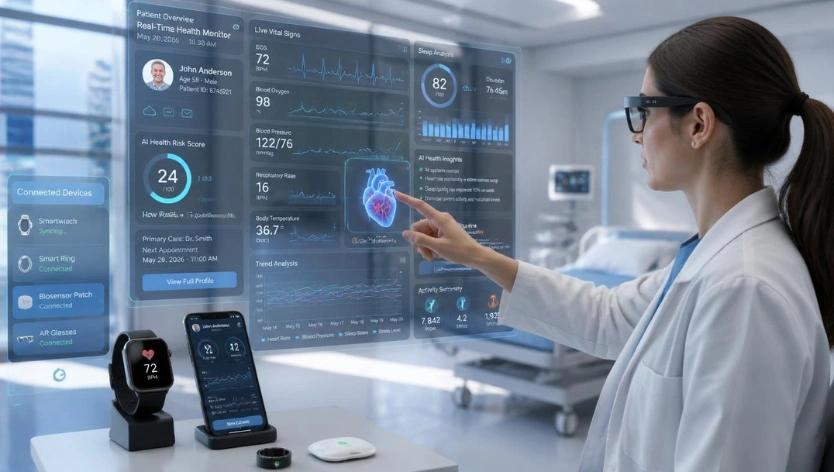
Future wearable technology is rapidly evolving beyond traditional smartwatches. AI-powered wearables, smart glasses, wearable health monitoring devices, smart clothing, and advanced biometric sensors are transforming how people work, communicate, travel, exercise, and manage their health. The next generation of wearables will become smarter, more personalized, and increasingly integrated into everyday life.
Introduction
For years, smartwatches have dominated the wearable technology market. They helped millions of people track fitness goals, monitor heart rates, receive notifications, and stay connected without constantly reaching for a smartphone. But the future wearable technology landscape is changing faster than many people realize.
The next wave of innovation is moving beyond wrist-based devices and into smart glasses, AI-powered wearables, smart clothing, wearable biosensors, mixed reality devices, and healthcare-focused technologies capable of continuous monitoring and predictive insights.
As artificial intelligence, wearable sensors, and connected ecosystems become more advanced, wearable devices of the future are expected to become less visible, more intelligent, and far more useful than today’s fitness trackers and smartwatches.
Whether you’re interested in digital health, fitness technology, consumer gadgets, or the future of smart wearable devices, understanding these emerging trends can help you prepare for the next major shift in personal technology.
What Is the Future of Wearable Technology?
The future of wearable technology is centered around AI-powered wearables, wearable health technology, smart glasses, biometric sensors, smart clothing, and continuous health monitoring systems. Instead of simply tracking steps or displaying notifications, future wearable devices will:
- Monitor health in real time
- Predict potential health issues
- Deliver AI-driven insights
- Enable hands-free computing
- Support remote patient monitoring
- Integrate seamlessly with smart environments
- Enhance productivity, fitness, and everyday convenience
The ultimate goal is to make technology more personal, proactive, and nearly invisible.
Overview of Future Wearable Technology
Wearable technology refers to electronic devices designed to be worn on the body. These devices collect data, communicate with other systems, and provide useful information to users in real time. Common examples include:
- Smartwatches
- Fitness trackers
- Smart rings
- Smart glasses
- ECG wearable devices
- Wearable medical devices
- Connected wearable devices
The wearable technology industry has evolved significantly over the past decade. Early devices focused primarily on activity tracking. Today’s smart wearable technology combines advanced sensors, artificial intelligence, cloud computing, and mobile connectivity.
The next generation of wearables is expected to focus less on displaying information and more on understanding, predicting, and improving user experiences.
Why Wearable Technology Matters
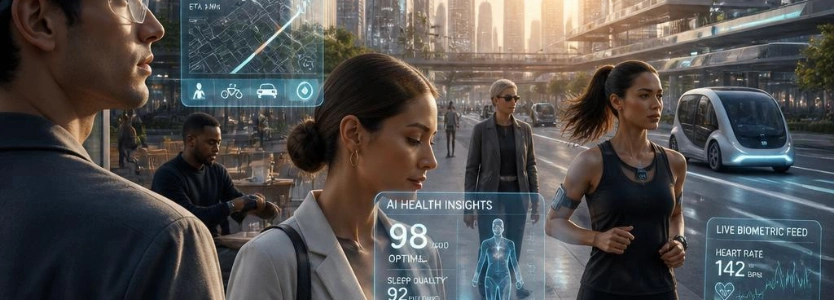
Wearables sit at the intersection of healthcare, fitness, communication, entertainment, and productivity. They help users:
- Improve health awareness
- Track fitness performance
- Monitor chronic conditions
- Reduce healthcare costs
- Increase convenience
- Access information instantly
As wearable technology innovations continue to accelerate, these benefits are expected to expand significantly.
The Biggest Wearable Technology Trends Shaping the Future
AI-Powered Wearables Are Becoming Personal Health Assistants
Artificial intelligence is quickly becoming the foundation of future wearable technology. Current devices collect data. Future devices will interpret it. AI wearable technology can analyze patterns across:
- Heart rate variability
- Sleep quality
- Blood oxygen levels
- Activity levels
- Stress indicators
- Recovery metrics
Instead of simply showing numbers, AI-powered wearables may provide actionable recommendations tailored to individual users.
Imagine your wearable recognizing signs of illness days before symptoms appear or recommending recovery strategies after detecting unusual physiological patterns. This shift from tracking to prediction represents one of the most significant wearable technology advancements in recent years.
Wearable Technology in Healthcare Is Expanding Rapidly
Healthcare may ultimately become the most impactful application of wearable technology. Wearable health monitoring devices are already helping patients and healthcare providers monitor conditions remotely. Emerging technologies include:
- Continuous glucose monitoring
- ECG wearable devices
- Blood pressure monitoring wearables
- Wearable biosensors
- Smart health wearables
- Remote patient monitoring devices
The future of wearable technology in healthcare involves continuous monitoring rather than occasional checkups. Doctors may soon receive real-time updates from patients’ wearable medical technology, allowing earlier intervention and improved outcomes.
For aging populations, wearable devices for seniors could provide safety monitoring, fall detection, medication reminders, and emergency response capabilities.
Smart Glasses Could Become the Next Smartphone
Many industry experts believe smart glasses technology represents the next major wearable category. Unlike smartphones, smart glasses keep information directly within a user’s field of view.
Potential applications include:
- Navigation
- Real-time translation
- Hands-free communication
- Workplace productivity
- Training and education
- Travel assistance
The combination of augmented reality wearables and AI assistants creates compelling possibilities. Future AR smart glasses could provide contextual information about surroundings, identify objects, translate languages, and assist users without requiring screens in their hands.
This is one reason many analysts view smart glasses and the future of wearables as closely connected.
Smart Clothing and Flexible Electronics Are Emerging
Wearables are no longer limited to watches, rings, and glasses. Researchers and manufacturers are exploring:
- Smart shirts
- Sensor-equipped athletic wear
- Connected jackets
- Smart footwear
- Electronic textiles
Flexible wearable electronics allow sensors to be embedded directly into fabrics. These next generation wearables may monitor:
- Body temperature
- Muscle activity
- Hydration levels
- Posture
- Movement patterns
Athletes, healthcare providers, military organizations, and industrial workers could all benefit from these innovations.
Wearable Technology and IoT Are Creating Connected Ecosystems
Future wearable gadgets won’t operate independently. Instead, they will become part of larger connected environments powered by the Internet of Things (IoT). Imagine walking into a hotel room while traveling.
Your wearable automatically:
- Adjusts room temperature
- Unlocks your door
- Loads entertainment preferences
- Syncs fitness data
- Connects transportation services
Wearable technology and IoT integration could make daily interactions more seamless and personalized.
Read More: How Wearables Connect With Your Smart Home Through Wearables Smart Home Integration
What Wearable Devices of the Future Might Look Like
Beyond Smartwatches: The Rise of Ambient Computing
Today’s smartwatches still require active interaction. Future wearable computing devices may become nearly invisible. This concept is often called ambient computing. Technology blends naturally into everyday life rather than demanding attention.
Examples include:
- Smart contact lenses
- AI earbuds
- Smart jewelry
- Embedded sensors
- Intelligent clothing
Users interact naturally through voice, gestures, eye movements, and contextual awareness. The technology fades into the background while delivering greater value.
Read More: Smartwatches of the Future May Change Health Travel and Everyday Life
Continuous Health Monitoring Could Become Standard
One of the most promising future applications of wearable technology involves proactive healthcare. Rather than waiting for symptoms to appear, future systems may continuously monitor:
- Cardiovascular health
- Respiratory health
- Sleep quality
- Stress levels
- Hydration
- Metabolic indicators
AI health monitoring devices could identify anomalies before they become serious medical issues.
This shift toward preventive healthcare technology has the potential to improve outcomes while reducing healthcare costs.
Machine Learning Wearables Will Deliver Personalized Experiences
Today’s recommendations are largely rule-based. Future machine learning wearables will learn from each user’s behavior.
Over time, devices could understand:
- Exercise preferences
- Sleep patterns
- Travel routines
- Work schedules
- Stress triggers
This creates highly personalized experiences that adapt automatically. Instead of generic alerts, users receive insights tailored specifically to their lifestyle.
Smart Wearables for Travel and Everyday Life
Travelers may benefit significantly from future wearable technology.
Future smart wearable devices could:
- Translate foreign languages instantly
- Display navigation through smart glasses
- Monitor jet lag and fatigue
- Track health metrics during long flights
- Improve travel safety
A smartwatch for travel and fitness may eventually evolve into a broader ecosystem that combines health monitoring, communication, payments, navigation, and AI-powered travel assistance. For frequent travelers, wearable technology could become an indispensable companion rather than simply a convenience.
Edge AI Wearables Are Making Devices Smarter
Traditionally, wearable devices depended heavily on cloud computing. Edge AI wearables process information locally.
Benefits include:
- Faster performance
- Better privacy
- Lower latency
- Reduced internet dependence
- Improved battery efficiency
As processors become more efficient, wearable technology innovations will increasingly rely on on-device intelligence rather than remote servers. This trend may significantly influence wearable technology trends through 2030.
The Wearable Technology Market Forecast
Industry analysts continue to project strong growth for the wearable technology market.
Several factors are driving adoption:
- Increased health awareness
- Aging populations
- AI advancements
- Improved sensor technology
- Rising demand for personalized healthcare
- Growth of remote patient monitoring
The wearable technology market forecast remains positive because wearables increasingly solve real-world problems rather than serving as simple gadgets. Consumers are demanding devices that deliver measurable value, and manufacturers are responding with smarter, more capable solutions.
Advantages of Future Wearable Technology
The future of wearable technology extends far beyond convenience. As AI-powered wearables become more sophisticated, they are expected to transform healthcare, fitness, workplace productivity, communication, and everyday living.
Better Health Monitoring
One of the biggest advantages of wearable health technology is continuous monitoring. Modern wearable sensors can already track heart rate, sleep quality, activity levels, and blood oxygen levels.
Future wearable health monitoring devices may provide:
- Early disease detection
- Personalized health recommendations
- Continuous vital sign monitoring
- Improved chronic disease management
- Better preventive healthcare
For many users, wearable devices may become a proactive health companion rather than a reactive tracking tool.
More Personalized Experiences
Machine learning wearables can learn from user behavior over time. Instead of generic alerts, future devices may offer:
- Personalized fitness coaching
- Customized recovery plans
- Travel recommendations
- Stress management suggestions
- Intelligent scheduling assistance
This level of personalization could make wearable technology significantly more valuable than today’s devices.
Increased Productivity
Smart glasses technology and wearable computing devices may allow users to access information without constantly checking phones or laptops.
Potential productivity benefits include:
- Hands-free communication
- Real-time navigation
- Context-aware notifications
- Remote collaboration
- Improved workplace efficiency
Better Remote Healthcare
Wearable technology for remote patient monitoring continues to gain momentum. Doctors and healthcare providers can potentially:
- Monitor patients remotely
- Detect health issues earlier
- Reduce unnecessary hospital visits
- Improve treatment outcomes
This is one reason wearable technology in healthcare remains one of the fastest-growing segments of the industry.
Improved Fitness and Wellness
Future fitness trackers and wearable sensors are expected to deliver more accurate insights. Users may benefit from:
- Smarter training recommendations
- Recovery tracking
- Injury prevention insights
- Hydration monitoring
- Advanced sleep analysis
The combination of AI and wearable technology future trends could fundamentally change how people approach personal wellness.
Read More: How Smart Health Wearables Are Revolutionizing Health in 2026
Limitations and Things to Consider
Despite rapid advancements, future wearable technology still faces several challenges.
Privacy Concerns
Wearables collect enormous amounts of personal information.
This includes:
- Health data
- Location information
- Activity patterns
- Biometric measurements
Consumers and manufacturers must balance convenience with data security and privacy protections.
Battery Life Limitations
One of the biggest challenges facing smart wearable technology is battery performance. As devices become more powerful, they require:
- More energy
- Faster processors
- Advanced sensors
- Continuous connectivity
Future innovations in battery technology will be critical to widespread adoption.
Cost Barriers
Many next generation wearables are likely to launch at premium prices. Advanced features such as:
- Augmented reality displays
- Medical-grade sensors
- AI processing
- Flexible wearable electronics
may initially be accessible only to higher-end consumers before becoming mainstream.
Data Accuracy Challenges
Wearable technology innovations continue to improve sensor accuracy, but no device is perfect. Environmental factors, user behavior, and hardware limitations can affect readings. Consumers should view wearable insights as valuable guidance rather than a replacement for professional medical advice.
Adoption and Social Acceptance
Not every wearable technology example succeeds commercially. Google Glass demonstrated that public acceptance can be as important as technical innovation.
Future wearable devices beyond smartwatches must balance functionality, comfort, aesthetics, and privacy expectations.
Who Is Future Wearable Technology Best For?
Future wearable technology will appeal to a wide range of users.
Health-Conscious Consumers
- Individuals tracking fitness goals
- Wellness enthusiasts
- Preventive healthcare advocates
- Sleep optimization users
Frequent Travelers
- International travelers
- Business travelers
- Digital nomads
- Adventure travelers
Future wearable gadgets may simplify navigation, communication, language translation, and travel safety.
Healthcare Professionals and Patients
- Chronic condition patients
- Remote monitoring programs
- Senior care providers
- Medical professionals
Athletes and Fitness Enthusiasts
- Runners
- Cyclists
- Gym users
- Endurance athletes
Advanced wearable sensors can provide detailed performance and recovery insights.
Technology Enthusiasts
- Early adopters
- Smart home users
- AI technology followers
- Consumer gadget enthusiasts
Frequently Asked Questions
What is wearable technology?
Wearable technology refers to electronic devices designed to be worn on the body. Examples include smartwatches, fitness trackers, smart rings, smart glasses, wearable medical devices, and smart clothing equipped with sensors.
How will wearable technology change the future?
Future wearable technology will shift from simple activity tracking to AI-driven health monitoring, predictive analytics, hands-free computing, and personalized digital experiences that integrate seamlessly into everyday life.
What are 10 examples of wearable technology?
Popular wearable devices examples include:
1.Smartwatches
2.Fitness trackers
3.Smart rings
4.Smart glasses
5.ECG wearable devices
6.Continuous glucose monitors
7.Smart clothing
8.Wearable biosensors
9.AI earbuds
10.Mixed reality headsets
What is the future of wearable technology in healthcare?
The future of wearable technology in healthcare focuses on continuous monitoring, remote patient care, predictive diagnostics, personalized healthcare wearables, and AI-assisted health insights.
What are smart wearable devices for health monitoring?
Smart wearable devices for health monitoring include fitness trackers, ECG monitors, blood pressure monitoring wearables, glucose monitoring systems, smart rings, and wearable biosensors that collect health-related data in real time.
What are the biggest wearable technology trends in 2026?
Major wearable technology trends in 2026 include:
1.AI-powered wearables
2.Smart glasses technology
3.Digital health wearables
4.Edge AI wearables
5.Flexible wearable electronics
6.Remote patient monitoring devices
7.Augmented reality wearables
What are the benefits of wearable technology?
Key wearable technology benefits include:
1.Better health awareness
2.Improved fitness tracking
3.Increased productivity
4.Enhanced safety
5.Personalized recommendations
6.Convenient access to information
Are smart glasses the future of wearables?
Many experts believe smart glasses and the future of wearables are closely connected because glasses offer hands-free access to information, navigation, communication, and augmented reality experiences.
The Future of Wearable Technology Is Just Getting Started
The future wearable technology landscape looks dramatically different from the smartwatch-focused market we know today. AI-powered wearables, wearable health monitoring devices, smart glasses, wearable biosensors, smart clothing, and wearable computing devices are creating entirely new ways for people to interact with technology.
Perhaps the most important shift is that wearables are becoming more intelligent, more proactive, and increasingly invisible. Rather than simply collecting data, future smart wearable devices will help users make better decisions, improve health outcomes, enhance productivity, and simplify everyday life.
While challenges around privacy, battery life, cost, and adoption remain, the direction is clear. The next generation of wearables is moving beyond notifications and step counts toward meaningful real-world value.
For consumers, healthcare providers, travelers, and technology enthusiasts alike, the future of wearable technology may prove to be one of the most transformative technology trends of the next decade.
