
Introduction
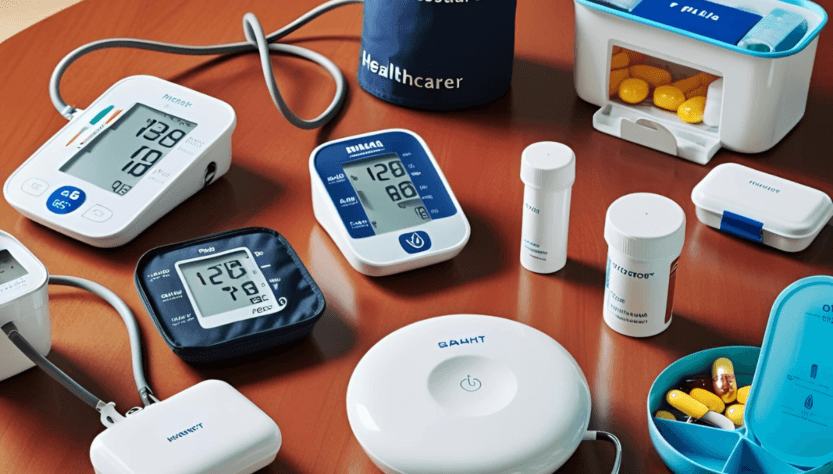
Keeping track of your health does not have to mean making frequent trips to a clinic just to collect basic measurements. Today’s healthcare gadgets make it easier to monitor selected health indicators, organize medication routines and understand everyday wellness trends from home.
These devices range from connected blood pressure monitors and personal ECG recorders to smart thermometers, glucose sensors and medication dispensers. Some are designed for people managing specific health conditions, while others support general wellness and household care.
However, a connected device is not automatically a medical device. A smartwatch cannot replace a clinical examination, and a home monitoring gadget should not be used to diagnose a condition on its own.
Here are 10 healthcare gadgets worth considering, what they do, and what to check before buying.
Check Out: Useful Smart Gadgets
Quick Comparison: Best Healthcare Gadgets
| Healthcare gadget | Recommended product | Best for | Price |
| Smart blood pressure monitor | Omron Platinum BP5465 | Home blood pressure tracking | $97.19 |
| Fingertip pulse oximeter | A medically cleared fingertip model | Spot-checking oxygen saturation when advised | $19.95 |
| Smart thermometer | Kinsa QuickCare | Family temperature and symptom tracking | $18.94 |
| Personal ECG device | AliveCor KardiaMobile 6L | Recording a portable ECG | $129.00 |
| Continuous glucose monitor | Dexcom Stelo | Glucose trend awareness for eligible adults | $48.97 |
| Health-tracking smartwatch | Apple Watch Series 12 with ECG app | Activity and selected heart-health features | $389.00 |
| Smart body-weight scale | Withings Body Smart | Tracking weight and body-composition trends | $229.95 |
| Smart medication dispenser | Hero Smart Dispenser | Medication schedules and reminders | $29.99 / month |
| TENS pain-relief device | Omron Max Power Relief PM500 | Temporary relief of certain types of pain | $49.80 |
| Smart air purifier | Levoit Core 300S-P | Managing airborne particles indoors | $149.99 |
1. Omron Platinum Blood Pressure Monitor: Track Readings at Home
A home blood pressure monitor can be useful for people who need to keep track of their readings between healthcare appointments. It can also help someone already diagnosed with high blood pressure share a more complete record with their healthcare professional.
The Omron Platinum Upper Arm Blood Pressure Monitor (BP5465) is a connected option to consider. It supports Bluetooth and smartphone-app connectivity, allowing users to store and review readings rather than relying on handwritten notes.
Why consider it?
- Automatic upper-arm blood pressure measurements
- Bluetooth connectivity and smartphone data storage
- Multiple user profiles and a large display
- A cuff designed for a range of adult arm sizes
Who should consider it: Adults who have been advised to monitor their blood pressure at home, particularly those who need to track readings over time.
What to check before buying: Cuff size and independent validation matter more than extra app features. The American Heart Association recommends an automatic upper-arm cuff-style monitor rather than wrist or finger devices. Check the exact model on a recognized validated-device list and confirm that the cuff fits your arm.
A home monitor does not replace medical appointments. Take it to a healthcare visit so a professional can check your technique and compare its readings with clinical equipment.
2. Fingertip Pulse Oximeter: Check Estimated Blood Oxygen Levels
A pulse oximeter clips onto a fingertip and uses light to estimate blood oxygen saturation (SpO2) and pulse rate. It is a compact device that may be useful for people who have been advised by a healthcare professional to monitor these measurements at home.
Unlike a smartwatch that estimates several wellness metrics, a fingertip pulse oximeter is designed specifically for spot-checking oxygen saturation.
Why consider it?
- Compact and portable design
- Quick readings of estimated oxygen saturation and pulse rate
- Simple operation for occasional home measurements
- Useful for recording readings when a clinician recommends monitoring
Who should consider it: People whose healthcare professionals have recommended home oxygen monitoring, or caregivers who have been shown how to use the device.
What to check before buying: Look for a model cleared for the intended medical use rather than assuming every inexpensive online pulse oximeter is medically validated. Check display readability, fit, instructions and the manufacturer’s accuracy information.
Pulse oximeters have limitations. Poor circulation, cold fingers, movement, nail polish and skin pigmentation can affect readings. A number on the screen should never be considered more important than how someone feels. Contact a healthcare professional if symptoms are concerning or worsening.
3. Kinsa QuickCare Smart Thermometer: Keep Family Temperature Records
A thermometer remains one of the most practical healthcare gadgets to keep at home. A connected model adds digital records and symptom tracking, which can be helpful when monitoring several family members.
The Kinsa QuickCare Smart Thermometer connects to the Kinsa app through Bluetooth. It supports oral, underarm and rectal measurements, and its app can store temperature readings, track symptoms and create individual family profiles.
Why consider it?
- Eight-second temperature readings, according to the manufacturer
- Bluetooth connection to the Kinsa app
- Individual profiles for family members
- Symptom tracking and medication reminders
- Can be used without the app for basic temperature readings
Who should consider it: Families who want a thermometer with digital records and a way to organize temperature and symptom history.
What to check before buying: Confirm the measurement method recommended for the person’s age and situation. Follow the instructions for cleaning and using the thermometer. App availability and features may also vary by region.
The app can help organize information, but its suggestions are not a substitute for medical advice.
4. AliveCor KardiaMobile 6L: A Portable Personal ECG Device
A personal electrocardiogram (ECG or EKG) device is a more specialized healthcare gadget. It records electrical signals from the heart and can provide a recording that users may share with a healthcare professional.
The AliveCor KardiaMobile 6L is a compact personal ECG device that records a six-lead ECG using three electrodes. It connects to a compatible smartphone or tablet through the Kardia app.
Why consider it?
- Records six-lead ECG readings
- Portable design for use outside a clinic
- Bluetooth connection to a compatible mobile device
- Allows recordings to be stored and shared with a healthcare professional
Who should consider it: Adults who want a personal ECG device and have discussed its usefulness with their healthcare professional, particularly those who need to record heart-rhythm information between appointments.
What to check before buying: Review smartphone compatibility, app requirements, subscription features and the device’s intended use. Some advanced features may require a paid membership.
A personal ECG is not a full hospital ECG and cannot detect every heart condition. It cannot rule out a heart attack. Seek emergency help for symptoms such as chest pain, severe shortness of breath or fainting rather than waiting for a device reading.
5. Dexcom Stelo: A Wearable Glucose Monitoring Sensor
Continuous glucose monitors have changed how some people track glucose patterns. Instead of relying only on occasional finger-prick measurements, a CGM uses a small wearable sensor to measure glucose continuously and display trends in a connected app.
The Dexcom Stelo Glucose Biosensor System is an over-the-counter option in the United States for eligible adults aged 18 and older who are not using insulin. It can help users understand how food, exercise and daily routines relate to glucose patterns.
Why consider it?
- Wearable glucose sensor
- Continuous glucose measurements and trend information
- Smartphone app for viewing readings
- Designed to help users understand glucose patterns over time
Who should consider it: Adults who meet the product’s intended-use criteria and want additional insight into glucose patterns. People with diabetes or other medical concerns should discuss whether this specific product is appropriate with a healthcare professional.
What to check before buying: Confirm eligibility, sensor wear time, smartphone compatibility, recurring sensor costs and the manufacturer’s instructions.
Stelo is not suitable for everyone. It is not intended for people using insulin or those with problematic hypoglycemia. Users should not change medication or make medical decisions based on its readings without consulting a qualified healthcare professional.
6. Apple Watch: Everyday Activity and Selected Heart-Health Features
A smartwatch is not a replacement for dedicated medical equipment, but it can make everyday health tracking more convenient.
Supported Apple Watch models include features such as heart-rate tracking, activity monitoring and an ECG app. The ECG app is available on Apple Watch Series 4 and later, excluding Apple Watch SE models, subject to regional availability and compatibility requirements.
Why consider it?
- Tracks daily movement and exercise
- Records heart-rate information
- Offers an ECG feature on supported models
- Stores selected health information in the Apple Health app
- Can help users review activity and sleep trends
Who should consider it: People who already use an iPhone and want activity tracking alongside selected health-monitoring features.
What to check before buying: Confirm the exact watch model, regional ECG availability, iPhone compatibility, battery life and the health features supported in your country.
The ECG app records a single-lead ECG rather than a standard 12-lead clinical ECG. It cannot detect a heart attack, high blood pressure or every type of heart-rhythm problem. Treat its results as information to discuss with a healthcare professional, not as a diagnosis.
Read More: Smart Wearable Technology
7. Withings Body Smart: A Connected Scale for Health Trends
A smart scale can make it easier to record weight consistently without manually entering every measurement into an app.
The Withings Body Smart connects to a smartphone and provides weight measurements alongside selected body-composition estimates. It can help users review longer-term trends rather than focusing on a single reading.
Why consider it?
- Digital weight measurements
- Connected app for storing measurement history
- Body-composition estimates, including body fat and muscle-related metrics
- Useful for tracking changes over time
Who should consider it: People who want a connected scale to organize weight and general body-composition trends.
What to check before buying: Review app compatibility, household-user support, privacy settings and the metrics available in your region.
Body-composition figures from consumer scales are estimates, not clinical measurements. Hydration, timing and other factors can affect the results. Use the scale to observe trends rather than treating each reading as a medical assessment.
Explore More: Smart Gadgets The Coolest One’s You Didn’t Know You Needed
8. Hero Smart Dispenser: Organize Medication Routines
Managing multiple medications can become difficult, particularly when doses need to be taken at different times. A smart medication dispenser can help organize a schedule and remind users when it is time for a dose.
The Hero Smart Dispenser stores and dispenses scheduled doses, while its connected app supports medication reminders, missed-dose notifications and caregiver visibility.
Why consider it?
- Stores and organizes multiple medications
- Provides sound and light alerts at scheduled times
- Dispenses scheduled doses with a button press
- Offers app-based medication tracking
- Allows caregivers or family members to receive selected notifications
Who should consider it: People managing several daily medications and families or caregivers who want additional visibility into medication routines.
What to check before buying: Hero operates through a subscription service rather than a simple one-time hardware purchase. Review current monthly or prepaid costs, Wi-Fi requirements, medication compatibility and the cancellation terms.
The dispenser does not decide which medicines someone should take or change a prescribed schedule. A pharmacist or healthcare professional should review medication changes and any questions about dosage.
9. Omron Max Power Relief: A TENS Device for Temporary Pain Relief
Transcutaneous electrical nerve stimulation (TENS) devices use mild electrical pulses delivered through skin pads. Some people use them for temporary relief of certain types of muscle or joint pain.
The Omron Max Power Relief PM500 is a portable TENS unit with multiple body-area and massage-like modes. It offers adjustable intensity settings and is designed for use with adhesive electrode pads.
Why consider it?
- Portable, battery-powered design
- Multiple modes for different body areas
- Adjustable intensity levels
- Reusable electrode pads
- Useful for people who prefer a drug-free pain-relief option when appropriate
Who should consider it: Adults looking for a home TENS device for temporary relief of certain aches and pains, provided it is appropriate for their situation.
What to check before buying: Review electrode-pad replacement costs, available modes, instructions and safety warnings. Ask a healthcare professional before use if you have an implanted electronic device, are pregnant or have a medical condition that could affect safe use.
A TENS unit is not a cure for the underlying cause of pain. Stop using it if it causes discomfort or irritation, and seek professional advice for persistent or unexplained pain.
10. Levoit Core 300S-P: A Smart Air Purifier for Indoor Air Quality
Indoor air quality is another part of a comfortable home environment. An air purifier is not a medical monitoring device, but it can help reduce selected airborne particles such as dust, pollen and pet dander.
The Levoit Core 300S-P Smart Air Purifier offers app-based controls, scheduling and a three-stage filtration system. Its manufacturer lists a clean air delivery rate (CADR) of 141 CFM and recommends checking room size when choosing where to use it.
Why consider it?
- Three-stage filtration system
- App-based controls and scheduling
- Sleep mode and filter replacement indicator
- Compact design for bedrooms and home offices
- Voice-control compatibility with supported smart-home platforms
Who should consider it: People who want to manage airborne particles in a bedroom, home office or other appropriately sized room.
What to check before buying: Compare the CADR with your room size, check replacement-filter costs and confirm that the model and filter meet your needs. An air purifier should be sized for the room and the number of air changes you want.
An air purifier does not diagnose or treat asthma, allergies or other respiratory conditions. It is one part of indoor air-quality management, not a substitute for medical care or source control.
Check Out: Smart Household Gadgets
How to Choose the Right Healthcare Gadgets
The best healthcare gadget is not necessarily the one with the most sensors or the most impressive app. Choose according to what you actually need to measure, monitor or manage.
1. Start with the purpose
Decide whether you need a device for blood pressure monitoring, temperature checks, medication reminders, glucose trends or general wellness. Avoid buying a medical device simply because it has more features than a basic model.
2. Check accuracy and intended use
For devices that measure health indicators, check the manufacturer’s intended use and available validation or regulatory information. A general-wellness tracker should not be treated as equivalent to a medical device.
3. Consider app compatibility
Some connected healthcare gadgets require a specific app, a compatible smartphone or an active account. Check whether the device works with your existing phone and whether you can export or share readings when needed.
4. Understand subscriptions and ongoing costs
The purchase price may not include everything. Consider replacement sensors, batteries, electrode pads, filters, app memberships and subscription services before choosing a product.
5. Review privacy and data sharing
Health information can be sensitive. Read the privacy policy, check what data the app collects and understand whether readings can be shared with family members, caregivers or healthcare professionals.
6. Make sure the device is easy to use
A complicated device may end up unused. Consider display size, button layout, setup steps, charging requirements and whether the intended user can operate it comfortably.
Healthcare Gadgets for Seniors and Caregivers
Some healthcare gadgets can make everyday routines easier for older adults and the people who support them.
Useful options include:
- Automatic blood pressure monitors: Help users record readings at home when monitoring is recommended.
- Smart medication dispensers: Organize scheduled doses and provide reminders.
- Digital thermometers: Make it easier to record temperature readings during illness.
- Smartwatches: Can provide activity tracking and selected safety or health features, depending on the model.
- Connected scales: Help users maintain a record of weight changes when appropriate.
The most useful device depends on the person’s mobility, eyesight, hearing, dexterity, medication routine and comfort with technology. Caregivers should also consider whether the device can be used reliably without constant technical support.
Check Out: Smart Kitchen Gadgets
Are Healthcare Gadgets Worth Buying?
Healthcare gadgets can be worthwhile when they solve a specific problem. A validated blood pressure monitor may help someone follow a clinician-recommended monitoring routine. A connected thermometer can organize family temperature records. A medication dispenser may make a complicated schedule easier to manage.
However, buying more devices does not automatically lead to better health. Some measurements are useful only when collected correctly and interpreted in the right context. Before investing in an expensive connected device, consider whether you will use it regularly and whether its information will help you make an informed decision with your healthcare professional.
Check Out: How to Get Amazon Prime Student Discount for Free
Frequently Asked Questions About Healthcare Gadgets
1. What are the most useful healthcare gadgets for home use?
Useful options include an automatic upper-arm blood pressure monitor, a digital thermometer, a fingertip pulse oximeter when recommended, a medication organizer or dispenser, and selected wearable health trackers. The right choice depends on the user’s needs and any advice from their healthcare professional.
2. Are home healthcare gadgets accurate?
Accuracy varies by device, model, intended use and how the device is used. Look for validated or appropriately cleared medical devices when measuring health indicators. Follow the manufacturer’s instructions and ask a healthcare professional to check your technique when appropriate.
3. Which healthcare gadgets are useful for seniors?
Automatic blood pressure monitors, easy-to-read thermometers, medication dispensers and selected wearable devices can support everyday routines. Choose products with simple controls, readable displays and suitable caregiver features.
4. Can healthcare gadgets connect to smartphones?
Many modern devices use Bluetooth or Wi-Fi to send readings to smartphone apps. However, compatibility varies. Check the supported phone models, operating-system requirements, app availability and any subscription fees before purchasing.
5. Can smartwatches replace medical devices?
No. Smartwatches can track activity, heart rate and selected health measurements, but they cannot replace dedicated medical equipment or professional assessment. Even smartwatch ECG features have specific limitations and are not designed to detect every heart condition.
6. Do all healthcare gadgets need FDA approval?
No. Regulatory requirements depend on the product’s intended use and claims. Some medical devices are FDA-cleared or approved, while general-wellness products may not undergo the same review. Check the exact model and its intended use instead of assuming every health-related gadget has FDA authorization.
Final Thoughts
Healthcare gadgets can make home monitoring and everyday care more organized. From a connected blood pressure monitor and personal ECG device to a smart thermometer and medication dispenser, the right tools can help users record useful information and maintain routines.
The key is to choose devices for a clear purpose, understand their limitations and use medical measurements responsibly. Connected technology can support conversations with healthcare professionals, but it should never replace professional diagnosis, treatment or emergency care.
Read More: Technology Guides and Gadget Insights

[…] Read More: Must-Have Home Healthcare Gadgets for Smarter Well-Being […]