
Introduction
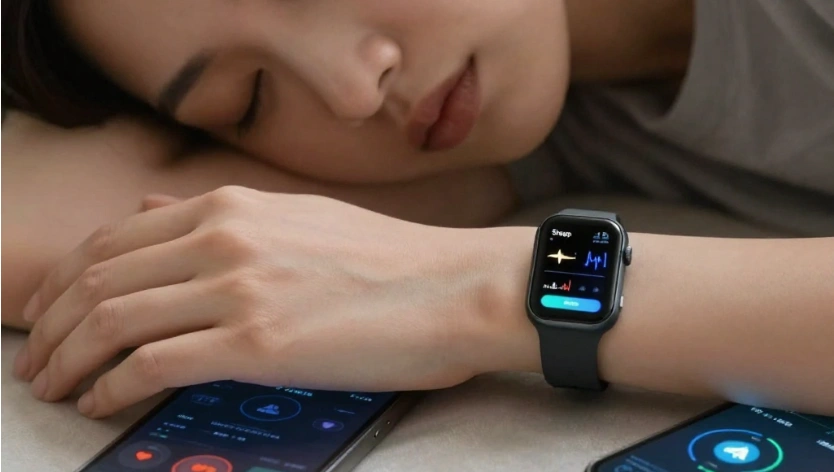
A good night’s sleep affects energy, concentration, physical recovery, and everyday well-being. However, knowing whether you’re getting enough quality sleep can be difficult without looking beyond the number of hours spent in bed. That’s where a Best Sleep Tracking Wearable can help.
Modern sleep tracking devices use sensors and software to estimate sleep duration, movement, heart rate, sleep stages, and other overnight patterns. Some smart rings focus on sleep and recovery insights, while smartwatches and fitness trackers combine sleep monitoring with everyday activity tracking. Dedicated sleep devices offer another option for people who prefer not to wear a watch overnight.
The right device depends on more than its feature list. Comfort, battery life, smartphone compatibility, data presentation, and subscription costs all influence the overall experience. This guide compares popular sleep-tracking options and explains what to consider before choosing one.
Read More : How Wearables Are Revolutionizing Health in 2026
Quick Comparison: Best Sleep Tracking Wearables
| Device | Type | Best for | What to consider | Price |
| Oura Ring 4 | Smart ring | Sleep and recovery insights | Ring sizing and membership cost | $249 |
| Fitbit Charge 6 | Fitness tracker | Sleep and everyday fitness tracking | Fitbit app features and compatibility | $132.59 |
| WHOOP 5.0 | Fitness and recovery wearable | Detailed recovery and activity insights | Membership requirement | $239 |
| Apple Watch | Smartwatch | iPhone users wanting an all-around wearable | Overnight battery management | $284.05 |
| Google Pixel Watch | Smartwatch | Android and Fitbit users | Battery life and subscription features | $259.99 |
| Circular Ring 2 | Smart ring | Sleep and wellness tracking | App experience and regional availability | $349 |
| Ultrahuman Ring AIR | Smart ring | Sleep and lifestyle insights | Fit, app features, and current pricing | $378.41 |
| RingConn Gen 2 | Smart ring | Ring-based sleep monitoring | Sizing and feature availability | $299 |
| Garmin Index Sleep Monitor | Dedicated sleep band | Users who prefer not to wear a watch | Compatibility with Garmin’s ecosystem | $169.60 |
| Muse S Athena | Sleep headband | People interested in headband-based sleep tracking | Wearing comfort and intended use | $474.99 |
Why Sleep Tracking Wearables Are Worth Considering
Sleep trackers offer a convenient way to observe overnight patterns. Rather than relying entirely on how rested you feel in the morning, you can review estimated sleep duration, bedtime consistency, movement, and other measurements over time.
Common features include:
- Sleep duration: Estimates how long you slept during the night.
- Sleep stages: Estimates time spent in light, deep, and REM sleep.
- Sleep consistency: Helps identify changes in bedtime and waking patterns.
- Heart rate: Tracks overnight heart rate and related trends.
- Heart rate variability: Provides another measurement that some devices use for recovery insights.
- Blood oxygen: Available on selected devices, although its availability and interpretation vary.
- Sleep scores: Combines selected measurements into a simplified score.
These measurements can help users recognize patterns, such as irregular bedtimes or changes in estimated sleep duration. However, a high sleep score does not automatically mean someone is well-rested, and a low score should not be treated as a medical diagnosis.
Read More: Best Smartwatches Under $200
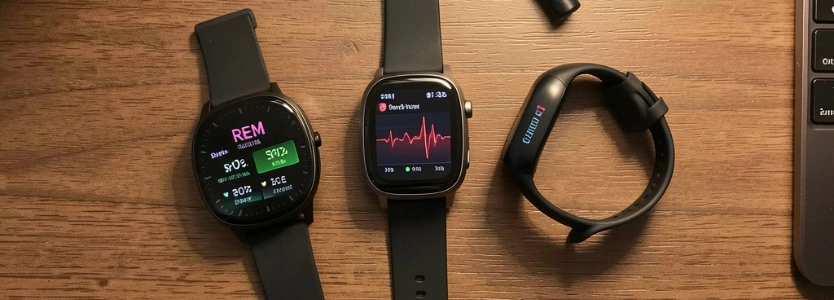
New to wearables? Start with our Smart Wearables Glossary to understand sleep tracking terms and health features.
How Sleep Tracking Works in Wearables
Most consumer sleep trackers combine movement sensors, optical heart rate sensors, and software algorithms to estimate sleep activity.
Movement sensors: Accelerometers and related sensors detect movement and periods of stillness. This information helps the device estimate when a person is asleep or awake.
Heart rate sensors: Optical sensors measure changes in blood flow to estimate heart rate. Some devices use these readings alongside movement data to estimate sleep stages.
Heart rate variability: Selected wearables calculate HRV from changes between heartbeats. This measurement can contribute to recovery and wellness insights.
Blood oxygen sensors: Some products measure overnight blood oxygen levels. These readings can offer additional context, but they should not be used alone to diagnose breathing or sleep conditions.
Algorithms: Each manufacturer uses its own software to interpret sensor readings and generate sleep scores, stage estimates, and trend reports.
The important distinction is that consumer wearables estimate sleep activity. They do not directly measure brain activity in the same way as a clinical sleep study. Their results are generally more useful for observing patterns over time than treating every individual reading as exact.
Read More Smart Wearables Future Tech
Best Sleep Tracking Wearables to Consider in 2026
1. Oura Ring 4 — A Smart Ring for Sleep and Recovery Insights
The Oura Ring 4 is a smart ring designed to collect sleep, activity, and wellness information without requiring a traditional smartwatch display. Its ring-based design makes it an option for people who prefer a compact wearable while sleeping.
What makes it worth considering
- Sleep duration and sleep-stage estimates
- Sleep and readiness scores
- Overnight heart rate and HRV-related insights
- Temperature trends and activity information
- A compact design without a watch screen
Best for: People who prioritize sleep and recovery information in a ring format.
Consider before buying: Check ring sizing, fit, current membership requirements, and the total cost of ownership.
Check Now: Sleep Tracker Wearable
2. Fitbit Charge 6 — A Fitness Tracker for Sleep and Daily Activity
The Fitbit Charge 6 combines everyday fitness tracking with sleep-related features. Its compact band format may appeal to people who want activity information and overnight monitoring without wearing a larger smartwatch.
What makes it worth considering
- Sleep-stage estimates and sleep summaries
- Daily activity and exercise tracking
- Heart rate monitoring
- A lightweight fitness-band design
- Integration with the Fitbit app
Best for: People who want one wearable for sleep monitoring and everyday fitness.
Consider before buying: Review which app insights require a Fitbit Premium subscription and check current feature availability.
3. WHOOP 5.0 — A Recovery-Focused Wearable
WHOOP takes a different approach from traditional smartwatches. Its experience centers on activity, recovery, strain, and sleep-related insights rather than a conventional watch interface.
What makes it worth considering
- Sleep tracking and sleep recommendations
- Recovery and strain insights
- Heart rate and HRV measurements
- Activity and workout monitoring
- A screen-free wearable experience
Best for: Fitness enthusiasts interested in connecting sleep patterns with training and recovery.
Consider before buying: WHOOP uses a membership-based model. Review the current subscription options and total cost before choosing it.
Check Out: Affordable Wearable Deals
4. Apple Watch — A Multipurpose Sleep Tracking Smartwatch
An Apple Watch can be useful for people who want sleep tracking alongside notifications, workouts, connected apps, and other smartwatch functions.
Its sleep-related features should be considered as part of the wider Apple health ecosystem rather than as a dedicated sleep-only experience.
What makes it worth considering
- Sleep schedule and sleep-stage information on supported models
- Integration with Apple’s Health app
- Heart rate and activity information
- A broad selection of smartwatch features
- Compatibility with the wider Apple ecosystem
Best for: iPhone users who want sleep tracking and everyday smartwatch functionality in one device.
Consider before buying: Battery management is important when wearing a smartwatch overnight. Check the selected model’s battery performance and charging routine.
Check Now: Wearable Games
5. Google Pixel Watch — A Smartwatch for Android and Fitbit Users
Google Pixel Watch models combine smartwatch functions with Fitbit-powered health and fitness features. They may suit Android users who want sleep information alongside notifications, apps, and daily activity tracking.
What makes it worth considering
- Sleep-related insights through Fitbit
- Heart rate and activity information
- Integration with Android and Google services
- Smartwatch apps and connected features
- A broader health and fitness experience
Best for: Android users who want a connected smartwatch with sleep tracking.
Consider before buying: Compare the exact Pixel Watch generation, battery performance, and any Fitbit subscription requirements.
6. Circular Ring 2 — A Ring-Based Sleep and Wellness Tracker
Circular Ring 2 is another option for people interested in tracking sleep and wellness without wearing a traditional watch. Its product information highlights sleep analysis alongside other health-related measurements.
What makes it worth considering
- Sleep tracking and sleep-stage estimates
- Sleep scores and wellness insights
- Heart rate and HRV-related measurements
- A compact ring design
- Core features advertised without a mandatory subscription
Best for: Buyers exploring smart rings as an alternative to wrist-worn trackers.
Consider before buying: Check the latest software support, regional availability, ring sizing, and app experience. Manufacturer-published accuracy claims should not be treated as independent test results.
Read More: Smart Rings vs Smartwatches Which Model Fits Your Style
7. Ultrahuman Ring AIR — A Smart Ring for Sleep and Lifestyle Insights
Ultrahuman Ring AIR is designed to collect sleep and lifestyle information in a compact ring format. It may interest people who want to review overnight patterns alongside broader daily wellness trends.
What makes it worth considering
- Sleep and recovery information
- Overnight physiological measurements
- Lifestyle and activity insights
- A screen-free design
- An app-based experience
Best for: People interested in combining sleep information with wider lifestyle tracking.
Consider before buying: Review the current app features, supported integrations, fit, and any optional paid services.
8. RingConn Gen 2 — A Smart Ring Alternative
RingConn Gen 2 offers another ring-based approach to sleep and wellness tracking. Its compact format may suit people who find a watch uncomfortable while sleeping.
What makes it worth considering
- Sleep monitoring and related summaries
- A ring-based form factor
- Wellness and activity information
- An alternative to wrist-worn devices
Best for: Buyers comparing smart rings for overnight comfort and sleep-related insights.
Consider before buying: Check the current model’s supported features, sizing process, battery performance, and app compatibility.
9. Garmin Index Sleep Monitor — A Dedicated Sleep Band
Not everyone wants to wear a smartwatch or ring overnight. A dedicated sleep-monitoring band offers a different approach for users who prefer a separate device for nighttime tracking.
Garmin Index Sleep Monitor is designed as an overnight wearable rather than a traditional smartwatch.
What makes it worth considering
- A dedicated sleep-monitoring format
- An alternative to wristwatch-based tracking
- Integration with Garmin’s health and fitness ecosystem
- A design intended for overnight use
Best for: Users who prefer a dedicated sleep device rather than wearing their everyday watch to bed.
Consider before buying: Confirm device compatibility, wearing position, current availability, and the specific measurements supported by the model.
10. Muse S Athena — A Headband-Based Sleep Tracking Option
Sleep-tracking headbands offer an alternative to rings, watches, and fitness bands. Muse S Athena is one product to consider when exploring this category.
A headband-based device may appeal to people interested in a different type of sleep-monitoring experience, although wearing comfort and the intended use should be considered carefully.
What makes it worth considering
- A headband-based form factor
- An alternative to wrist and finger wearables
- Sleep-related monitoring and insights
- A different approach to overnight tracking
Best for: People interested in exploring headband-based sleep technology.
Consider before buying: Check the product’s current availability, supported features, fit, and whether its design is comfortable for your preferred sleeping position.
Smart Ring vs Smartwatch for Sleep Tracking
Smart rings and smartwatches both offer sleep-related information, but they serve slightly different needs.
| Buying factor | Smart ring | Smartwatch |
| Overnight comfort | Compact design may feel less intrusive | Larger case may bother some sleepers |
| Sleep tracking | Often emphasizes sleep and wellness insights | Usually combines sleep with broader health features |
| Screen | Generally screen-free | Includes a display |
| Everyday features | Usually more limited | Notifications, apps, calls, and activity features |
| Battery routine | Depends on the ring model | Some models may need frequent charging |
| Best suited to | Sleep-focused and wellness tracking | All-around health and smartwatch use |
There is no universal winner. A ring may be more comfortable for one person, while another may prefer a watch that tracks workouts and daily activity as well as sleep.

Check Out : Best Fitness Trackers for Beginners
What to Look for When Choosing the Best Sleep Tracking Wearable
1. Overnight Comfort
Comfort should be one of the first considerations. A device that feels bulky, tight, or distracting may be difficult to wear consistently.
Consider the device’s weight, material, strap or ring fit, and how it feels when sleeping on your side.
2. Battery Life and Charging
Battery life affects how easily a wearable can collect overnight data. A device that needs frequent charging may interrupt tracking if it is not charged at the right time.
Compare manufacturer battery estimates with independent reviews, and consider how long the device takes to recharge.
3. Useful Sleep Metrics
More measurements do not necessarily mean better sleep insights. Look for features that answer practical questions, such as:
- How long did I sleep?
- Is my bedtime consistent?
- Are my sleep patterns changing?
- Can I review overnight heart rate trends?
- Does the app explain its sleep score clearly?
Choose the metrics you are likely to use rather than paying for features that add little value to your routine.
Read More: Best Smartwatches for Seniors in 2026
4. Smartphone Compatibility
Check whether the wearable works with your smartphone and operating system. Some features may be restricted to particular devices or regions.
Before purchasing, review the manufacturer’s compatibility information and app requirements.
5. Subscription and App Costs
Some wearables provide basic tracking without a recurring fee, while others charge for advanced reports, coaching, or personalized insights.
Compare the purchase price with the cost of any required membership. A device that looks affordable initially may cost more over several years.
6. Data Privacy and Sharing
Sleep trackers collect personal information about routines and physiological measurements. Review the manufacturer’s privacy policy, data-sharing settings, account requirements, and options for exporting or deleting information.
How Accurate Are Sleep Tracking Wearables?
Consumer sleep trackers can provide useful estimates of sleep duration and overnight patterns, but their measurements are not identical to clinical sleep testing.
Most devices use movement, heart rate, and other sensor readings to estimate whether someone is asleep or awake and to classify sleep stages. Different manufacturers use different sensors and algorithms, so results can vary between products.
For a more useful experience:
- Look at trends across several nights rather than focusing on one score.
- Compare estimated sleep duration with your own sleep routine.
- Avoid treating individual REM or deep-sleep readings as exact.
- Do not use consumer wearable readings to diagnose sleep disorders.
- Speak with a qualified healthcare professional if you have persistent sleep concerns.
A sleep tracker is best viewed as a tool for observing patterns, not a replacement for medical evaluation.
Read More: Best Wearables Elderly Health for Senior Monitoring
Do You Need a Subscription for Sleep Tracking?
Not always. Subscription requirements depend on the manufacturer and the specific features included with each product.
Some devices provide basic sleep summaries without a recurring fee. Others reserve selected reports, coaching features, or advanced insights for paid memberships.
Before buying, check:
- Which sleep metrics are available without paying?
- Are historical reports restricted?
- Does the device require an ongoing membership?
- Can you continue using basic tracking if the subscription ends?
- What is the total cost over one or two years?
This comparison is especially important when evaluating smart rings and recovery-focused wearables.
Explore More: Wearables for Sports Performance Tracking for Gamers Devices
FAQs: Best Sleep Tracking Wearable (2026)
What is the best sleep tracking wearable in 2026?
The best sleep tracking wearable depends on your priorities. Oura Ring 4 is a candidate for people interested in ring-based sleep and recovery insights. Fitbit Charge 6 offers a combination of sleep and everyday fitness tracking, while Apple Watch and Google Pixel Watch suit buyers who want broader smartwatch features.
Are smart rings better than smartwatches for sleep tracking?
Smart rings may feel less intrusive for some people because they do not have a watch case or display. Smartwatches offer broader features, including notifications, exercise tracking, and connected apps. Comfort and the quality of the app experience should guide the decision.
Can wearables accurately track deep and REM sleep?
Wearables estimate sleep stages using heart rate and movement data. They are reliable for trends, not medical diagnosis.
Do sleep tracking wearables track sleep apnea?
Some wearables monitor blood oxygen and breathing patterns but cannot diagnose sleep apnea.
Which wearable has the best battery life for sleep tracking?
Fitness trackers and smart rings often offer excellent battery life, ranging from 7 to 11 days.
Are older sleep tracking wearables still worth buying?
Older models can be a good option if they meet your needs, but newer devices offer better sensors and insights.
Can a wearable accurately measure REM and deep sleep?
Wearables estimate sleep stages using sensor readings and algorithms. These estimates can help users observe patterns, but they should not be considered exact clinical measurements.
Do sleep trackers monitor sleep apnea?
Some devices offer measurements such as blood oxygen or breathing-related estimates. However, ordinary consumer sleep trackers should not be relied on to diagnose sleep apnea. Anyone concerned about sleep-disordered breathing should seek medical advice.
Which sleep tracking wearable has the best battery life?
Battery life varies by product, settings, and usage. Some smart rings and fitness bands are designed to last multiple days between charges, while certain smartwatches require more frequent charging. Check current model-specific testing before making a decision.
Can I use a smartwatch only for sleep tracking?
Yes. Many smartwatches provide sleep tracking without requiring users to use every other feature. However, consider whether the watch is comfortable overnight and whether its charging routine fits your schedule.
Are older sleep trackers still worth buying?
Older models may offer useful basic tracking, but buyers should check software support, battery condition, app compatibility, sensor features, and replacement availability. A lower purchase price is not always better value if support has ended.
Read More: Smart Wearable Technology
Final Verdict
Choosing the Best Sleep Tracking Wearable means finding a device that fits your sleeping habits, budget, and preferred level of health information. Smart rings offer a compact alternative to wrist-worn devices, fitness trackers combine sleep monitoring with everyday activity features, and smartwatches provide a broader connected experience.
Before making a purchase, compare overnight comfort, battery life, supported sleep metrics, smartphone compatibility, and subscription costs. Most importantly, treat sleep scores and stage estimates as helpful indicators rather than medical measurements.
The most useful sleep tracker is not necessarily the one with the longest feature list. It is the one you can wear comfortably, understand easily, and use consistently to observe your sleep patterns.
Read More: International Travel Gadgets You Should Never Travel Without

[…] Read More: Best Sleep Tracking Wearables : Top Devices […]
[…] Read More: Best Sleep Tracking Wearables of 2026 […]
[…] Read More: Best Sleep Tracking Wearables of 2026 […]
[…] Check out: Best Sleep Tracking Wearables of 2026 […]
[…] Read More: Best Sleep Tracking Wearables of 2026 […]