
Introduction
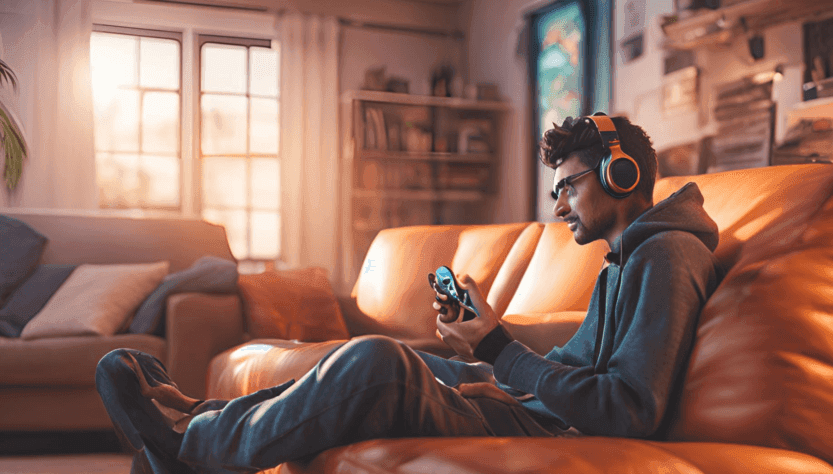
Portable gaming has evolved far beyond simple games on small screens. Today’s Handheld Gaming devices let players enjoy PC games, console-style adventures, retro classics, and streamed titles during flights, commutes, hotel stays, and relaxing evenings at home.
The best portable gaming device depends on how you play. Some handhelds provide access to large PC game libraries, while others focus on console exclusives, retro gaming, or cloud streaming. Battery life, comfort, game compatibility, and price can matter just as much as raw performance.
This guide compares popular handheld gaming devices, explains what each type does best, and highlights the features to consider before buying. Whether the goal is portable PC gaming, casual entertainment, or revisiting classic games, the right device should fit both the gaming library and everyday routine.
Best Handheld Gaming Devices at a Glance
| Device | Best for | Main Advantage | Main Limitation | Check On Amazon |
| Steam Deck OLED | Overall PC handheld gaming | OLED display, Steam library, user-friendly SteamOS | Not every PC game is compatible | Check Now |
| ASUS ROG Ally X | Windows-based PC gaming | Broad PC storefront compatibility and strong performance | Windows setup and premium pricing | Check Now |
| Lenovo Legion Go | Large-screen handheld gaming | Spacious display and Windows flexibility | Bulkier design | Check Now |
| Logitech G Cloud | Cloud and remote-play gaming | Lightweight design focused on streaming | Relies heavily on a reliable internet connection | Check Now |
These devices serve different types of players. The Steam Deck OLED is a strong starting point for Steam users, Windows handhelds suit players who want access to multiple PC storefronts, and the Logitech G Cloud is more appropriate for streaming-focused gaming. Buyers interested primarily in Nintendo games or retro classics should also compare dedicated consoles and specialist retro handhelds before making a decision.
Before choosing a device, compare current Gaming Deals to see whether a handheld, gaming accessory, or related product fits your budget.
Why Handheld Gaming Devices Are Suddenly Everywhere
The rise of portable gaming is not happening by accident. People want entertainment that fits around real life. Sitting at a desk after work no longer feels appealing to everyone, and endlessly scrolling through social media has started losing its charm. Handheld gaming fills that gap perfectly.
A quick gaming session during a commute feels more immersive than mobile gaming. A long airport delay becomes easier to tolerate. Even relaxing in bed with a favorite RPG now feels more convenient than powering up a full console setup.
That flexibility is exactly why handheld gaming devices are gaining attention far beyond hardcore gaming communities.
How to Choose a Portable Gaming Device
Start with the games you want to play rather than the device with the most impressive specifications. A powerful handheld gaming PC may be ideal for demanding PC titles, but it can be unnecessarily expensive for someone who mainly enjoys retro games or cloud streaming.
Consider these five factors before buying:
- Game library: Check whether your favorite games run on the device and whether they require a specific operating system or launcher.
- Performance: Demanding modern games need more processing power than many indie, retro, and casual titles.
- Battery life: Gaming at higher performance settings can drain a battery quickly, particularly on PC handhelds.
- Portability: Screen size, weight, controls, and charging requirements all affect how practical a device is for travel.
- Budget: Compare the total cost of the handheld, storage upgrades, protective cases, chargers, and any required subscriptions.
It is also worth deciding whether local gaming or streaming is the better fit. Devices that run games directly can work without a constant internet connection for supported titles. Cloud gaming devices depend much more heavily on network quality and service availability.
Best Handheld Gaming Devices to Consider
1. Steam Deck OLED
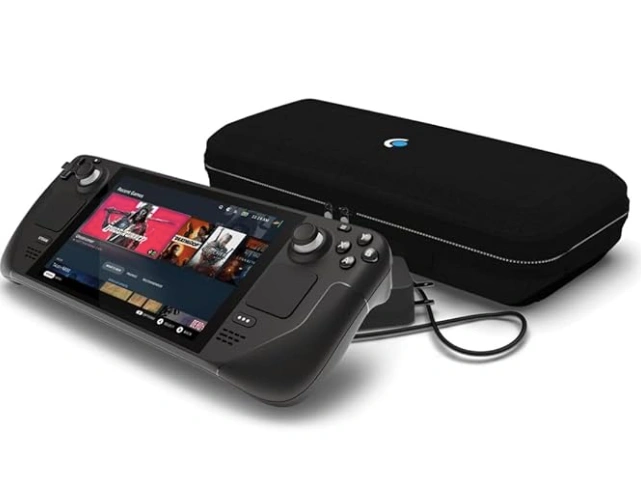
The Steam Deck OLED remains a compelling choice for players who want a portable PC gaming experience without building a complicated setup. Its 7.4-inch OLED display, integrated controls, and SteamOS interface make it particularly appealing to players with an established Steam library.
The OLED panel provides rich contrast and vibrant colors, while the device’s control layout includes thumbsticks, trackpads, triggers, and rear grips. SteamOS also provides a console-like interface that makes browsing and launching compatible games straightforward.
Why consider it
- Access to a large library of PC games through Steam.
- An OLED display with a refresh rate of up to 90Hz.
- Comfortable controls for many genres, including action games, RPGs, and platformers.
- A relatively approachable interface for players who prefer a console-style experience.
What to consider
The Steam Deck OLED is not the most powerful handheld gaming PC available, and not every PC title works equally well on SteamOS. Some games may have compatibility limitations because of their launchers, anti-cheat systems, or software requirements. Demanding games can also reduce battery life considerably.
Best for: Players who want a balanced portable gaming device, particularly those who already own games on Steam and value usability over maximum performance.
2. ASUS ROG Ally X
The ASUS ROG Ally X is a Windows-based handheld gaming PC designed for players who want access to a broader range of PC games and launchers. Compared with the original ROG Ally, the Ally X includes hardware and battery improvements that make it a more capable option for extended gaming sessions.
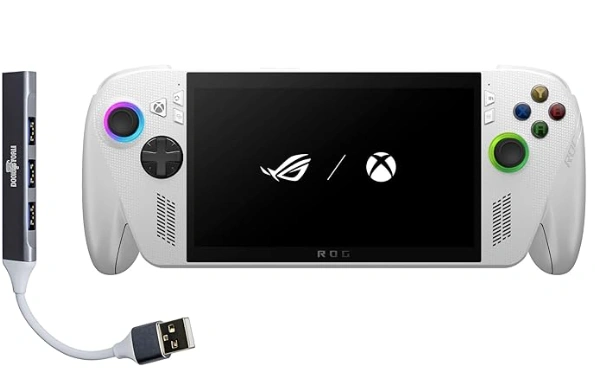
Windows allows users to install compatible games and applications from multiple storefronts, including Steam, the Xbox app, Epic Games Store, and other PC platforms. This flexibility can be valuable for players whose libraries are spread across different services.
Why consider it
- Broad compatibility with Windows-based PC gaming software.
- Access to multiple storefronts and supported PC subscriptions.
- Strong performance for a handheld form factor.
- An improved battery capacity compared with the original ROG Ally.
What to consider
Windows provides flexibility, but its desktop-oriented interface can require more setup and troubleshooting than SteamOS. The Ally X is also a premium purchase, and performance settings affect both battery life and heat.
Important model distinction: The original ASUS ROG Ally X should not be confused with the newer ROG Xbox Ally X. The newer model uses a different hardware platform and an Xbox-oriented interface. Compare the exact model, specifications, current US price, and available deals before buying.
Best for: PC gamers who use several storefronts, want Windows compatibility, and are willing to pay more for flexibility.
3. Lenovo Legion Go
The Lenovo Legion Go is designed for players who prefer a larger display for portable PC gaming. Its 8.8-inch screen gives games more room to breathe, which can be appealing for open-world adventures, strategy titles, and games with detailed interfaces.
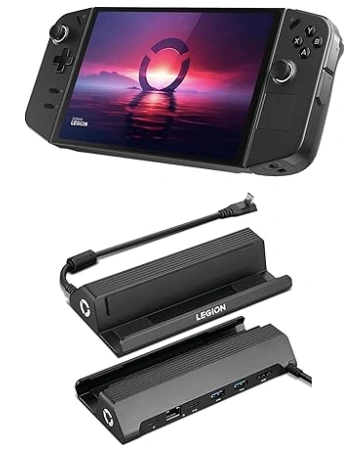
Its Windows-based platform supports a broad range of PC gaming applications. The detachable controllers also provide a different style of play compared with conventional handheld designs, although the overall device is larger than many alternatives.
Why consider it
- A large display suited to immersive gaming and detailed interfaces.
- Windows compatibility with supported PC games and applications.
- Detachable controllers for different play and setup options.
- A versatile design for gaming at home or in a hotel room.
What to consider
The larger body can make the device less convenient to carry and hold for long sessions. Battery life varies with the game, display settings, and performance mode, so buyers who travel frequently should consider the trade-off between screen size and portability.
The Legion Go family includes different configurations, so verify the exact model and operating system before purchasing.
Best for: Players who prioritize a larger screen and PC gaming flexibility over having the smallest, lightest handheld.
4. Logitech G Cloud
The Logitech G Cloud takes a different approach to portable gaming. Rather than competing directly with high-performance handheld gaming PCs, it focuses on cloud gaming and remote play through supported services.
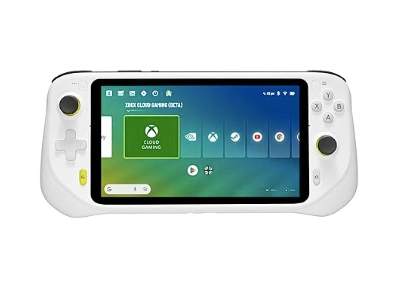
Its lightweight design makes it appealing for casual sessions, streaming games around the house, or playing remotely while traveling. Because much of the processing happens elsewhere, it does not need to match the hardware of a dedicated gaming PC handheld.
Why consider it
- A lightweight design focused on comfortable portable play.
- Suitable for compatible cloud gaming and remote-play services.
- An alternative for players who do not need to run demanding PC games locally.
- A straightforward option for streaming-focused gaming routines.
What to consider
The experience depends on a stable, sufficiently fast internet connection and the availability of compatible services. Public Wi-Fi, hotel networks, mobile data limits, and latency can affect gameplay. It is also not a direct replacement for a handheld gaming PC when offline gaming or demanding local titles are the priority.
Best for: Casual players who mainly stream games or use remote play and have reliable network access.
Portable PC Gaming Devices vs. Cloud Gaming Handhelds
Portable gaming devices generally fall into several categories. Understanding the differences makes it easier to choose a device that matches both the games and the way it will be used.
| Category | How it works | Main benefit | Main trade-off |
| Portable PC gaming devices | Run compatible games locally | Broad game libraries and offline play for supported titles | Higher cost, power consumption, and weight |
| Dedicated gaming consoles | Run games designed for a particular console platform | Simple setup and access to platform-specific titles | More restricted game ecosystem |
| Cloud gaming handhelds | Stream games over the internet | Lightweight hardware and access to supported streaming services | Network quality and service requirements |
| Retro gaming handhelds | Focus on classic games or supported emulation | Compact designs and nostalgia-focused gaming | Limited suitability for demanding modern games |
Portable PC gaming devices such as the Steam Deck OLED and ASUS ROG Ally X offer greater flexibility than many dedicated consoles, but that flexibility can require more configuration. Dedicated consoles can be easier for players who want a consistent experience without managing PC settings.
Cloud gaming handhelds make sense when streaming is the priority. Retro gaming handhelds serve another audience entirely: players who want compact devices for older games, classic collections, or carefully selected emulation systems.
Before purchasing a retro handheld, check which systems it officially supports and how games are obtained. Compatibility differs by device, and users should follow applicable laws and the terms governing their game collections. If you prefer a full-size gaming setup for a larger screen, explore the Best Gaming Consoles for 4K TVs in 2026 PS5, Xbox Series X.
Handheld Gaming Devices for Travel and Everyday Use
Portable gaming devices can make waiting periods and downtime more enjoyable, but the most suitable device depends on the situation.
For flights and long journeys: Look for comfortable controls, manageable weight, good battery efficiency, and a way to charge the device. Download supported games before leaving home because airport and in-flight internet may not be suitable for gaming.
For commutes and short breaks: A compact handheld or a device that quickly resumes gameplay can be more convenient than a large PC handheld. Short-session games, puzzle titles, and turn-based adventures are particularly practical.
For hotel stays: A larger handheld can provide an immersive experience without requiring a complete gaming setup. Check the availability of power outlets and consider using offline games when the hotel network is unreliable.
For gaming at home: A PC handheld can complement a desktop or console by letting players continue gaming away from a desk. Some devices also support docking or external displays, although the necessary accessories may add to the cost.
For retro gaming: Specialist handhelds can offer a more compact way to enjoy classic titles. Choose one based on its supported platforms, controls, screen, and game access rather than assuming every retro device can run every old console.
For a different approach to gaming on the move, check out Best Wearable Games Devices That Turn Real Life Into Playtime, which explores gaming experiences built around wearable technology
What to Check Before Buying a Handheld Gaming Device
Battery life and charging
Battery life depends on the device, game, brightness, performance settings, and network use. A demanding PC game can consume considerably more power than a lightweight indie game or retro title.
Manufacturer estimates can provide a starting point, but they are not guarantees of real-world gaming time. Check independent testing for the types of games you plan to play, and consider carrying a compatible charger or power bank where permitted. For frequent travel, balanced performance and efficient battery use may be more valuable than the highest possible frame rate.
Comfort, weight, and display
A large display can make games more immersive, but it usually increases the size of the device. Heavier handhelds can become uncomfortable during extended sessions, particularly when playing in bed, on a train, or in a cramped seat.
Look at the grip shape, button placement, thumbstick position, screen brightness, and display type. OLED screens can offer rich contrast, while higher-resolution or faster-refresh displays may improve clarity and motion in supported games. The benefits depend on the device and the games being played. If possible, try holding the device before buying it or read detailed reviews that discuss ergonomics rather than relying on specifications alone.
Game library and compatibility
Check the games you want to play before choosing a handheld gaming device. The same title may run differently across SteamOS, Windows, Android, dedicated console platforms, and cloud gaming services.
For PC handhelds, investigate game compatibility, controller support, launcher requirements, and anti-cheat limitations. For dedicated consoles, check platform exclusives and supported game libraries. For cloud gaming devices, verify that your preferred service and games are available in your region. Retro gaming buyers should also check the supported systems, controls, display format, and legal ways to access games.
Price and overall value
The purchase price is only one part of the cost. Storage upgrades, accessories, subscriptions, protective cases, chargers, and replacement components can increase the total expense.
Compare devices using the same criteria: performance, game compatibility, comfort, battery life, and the games already owned. A more expensive handheld may be worthwhile for a player who needs Windows flexibility, while a less expensive device may provide better value for retro gaming or casual play. Check current prices and availability from reputable retailers before purchasing. Discounts change frequently, so compare the exact model and storage configuration rather than relying on an old advertised price.
The Future of Handheld Gaming Looks Bigger Than Expected
The gap between handheld and console gaming continues shrinking. Devices like the Nintendo Switch OLED already proved gamers value flexibility more than raw power alone. Meanwhile, cloud gaming and portable PC gaming continue pushing handheld devices into mainstream entertainment.
Portable gaming no longer feels like a secondary option.
For many players, it is quietly becoming the preferred way to play.
Frequently Asked Questions About Portable Gaming Devices
What is the best handheld gaming device right now?
The best choice depends on the games and features that matter most. The Steam Deck OLED is a strong option for Steam users seeking a balanced PC handheld, while Windows-based devices offer broader launcher compatibility. Dedicated consoles and retro handhelds may be better for players with more specific gaming needs.
Are handheld gaming devices worth buying in 2026?
They can be worth buying for players who value gaming away from a desk or television. Modern handhelds support a range of experiences, from PC games and dedicated console titles to retro gaming and cloud streaming. Value depends on price, compatibility, portability, and how often the device will be used.
Which handheld gaming device has the best battery life?
Cloud-focused and retro handhelds generally last longer than powerful handheld gaming PCs designed for AAA gaming.
Is the Steam Deck OLED better than the ASUS ROG Ally X?
The Steam Deck OLED offers better optimization and value, while the ASUS ROG Ally X provides stronger Windows compatibility and raw performance.
Are handheld gaming devices good for travel?
Yes. Portable gaming devices are especially useful during flights, commutes, hotel stays, and long waiting periods where traditional gaming setups are impractical.
What is the best handheld gaming device for cloud gaming?
The Logitech G Cloud is one of the best options for cloud gaming because it focuses heavily on streaming performance and lightweight portability.
Can handheld gaming devices replace gaming laptops?
They can replace a laptop for some gaming routines, especially when portability and controller-based play are priorities. However, handhelds generally have smaller displays and different performance, cooling, and input capabilities. A gaming laptop may be more suitable for desktop applications, keyboard-and-mouse gaming, or sustained high-performance workloads.
Are retro handheld gaming devices still popular?
Yes. Nostalgia, portability, and affordable pricing continue driving strong interest in retro handheld gaming consoles.
What games work best on handheld gaming devices?
The best games depend on the device and its controls. Indie games, RPGs, platformers, puzzle games, and turn-based titles can work especially well on portable screens. Demanding games may also be playable on suitable PC handhelds, but performance, battery life, and compatibility vary.
What should buyers prioritize before choosing a handheld gaming device?
Battery life, comfort, gaming ecosystem compatibility, portability, and display quality usually matter more than raw specifications alone.
Which handheld gaming device is best for travel?
The best travel device balances weight, battery life, comfort, and game availability. A compact or efficient handheld can be more convenient for long journeys, while larger PC handhelds may suit travelers who prioritize performance and screen size.
What is the difference between a portable gaming device and a portable gaming PC?
A portable gaming device is a broad category that includes dedicated consoles, retro handhelds, cloud streaming devices, and portable PCs. A portable gaming PC runs a PC operating system or PC gaming platform and can support compatible computer games and applications, although compatibility varies by hardware and software.
Are handheld gaming PCs better than cloud gaming handhelds?
Neither is better for every player. A handheld gaming PC can run supported games locally and offers greater flexibility for offline use. A cloud gaming handheld can be lighter and simpler for streaming, but it depends on a reliable connection and compatible services.
Which handheld is best for PC games?
The Steam Deck OLED is appealing for players who mainly use Steam, while Windows handhelds are useful for players who need multiple PC storefronts or particular Windows applications. Check individual game compatibility before choosing either type.
Are retro handheld gaming devices worth buying?
Retro handhelds can be a good choice for players who primarily want classic games in a compact format. Their value depends on supported systems, screen quality, controls, game access, and how accurately they handle the games being played.
What should buyers prioritize before choosing a portable gaming device?
Start with game compatibility, then compare battery life, comfort, display quality, portability, and total cost. Choosing a device that suits an existing game library is usually more practical than paying extra for specifications that will rarely be used.
For more buying advice, gadget comparisons, and consumer technology coverage, explore our Technology Guides and Gadget Insights.
Final Verdict
The best handheld gaming device is the one that fits the way you play. The Steam Deck OLED offers a compelling experience for many Steam users, Windows handhelds provide broader PC gaming flexibility, and cloud-focused devices suit players who prefer streaming. Retro handhelds remain worth considering for classic gaming.
Before buying, compare current US pricing, supported games, battery performance, and comfort. A little research can help avoid paying for hardware that does not match your gaming habits.
