
Introduction
Smart homes have quietly moved from novelty to everyday convenience. Lights turn on automatically. Thermostats adjust before anyone walks in the door. Security cameras send alerts to phones within seconds.
For years, the smartphone was the center of this connected ecosystem. Recently a new layer of control has emerged that feels even more natural. Wearable technology is becoming the bridge between people and their homes.
The idea behind wearables smart home integration is simple. Instead of reaching for a phone or opening an app, a person can control their home directly from the device on their wrist, finger, or even through smart glasses. A smartwatch can unlock a door. A smart ring can trigger nighttime routines. Augmented reality glasses could soon let homeowners interact with devices in a visual interface.
What once required multiple apps and manual commands now happens automatically. Homes begin responding to the habits, movement, and even the health signals of the people living in them.
Read More: Smart Wearable for the Future
The Evolution of Smart Home Control
Smart home technology first gained popularity through voice assistants and mobile apps. Systems like smart speakers made it possible to turn on lights or adjust temperature with a simple command. Yet many users quickly discovered a limitation. Phones still had to be unlocked, apps opened, and commands given. The process worked, but it was not completely seamless. Wearables changed that experience.
Because wearable devices remain on the body throughout the day, they provide a constant connection to the digital environment. They can track location, motion, sleep patterns, and biometric data while also serving as control panels for connected devices. This shift turns wearable devices into a personal interface for the entire home. Instead of controlling technology, people simply live their routines while their environment adapts automatically.
Understanding Wearables Smart Home Integration
At its core, wearables smart home integration means wearable devices communicating with Internet of Things systems inside a home.
These systems include connected devices such as:
- Smart lighting systems
- Smart thermostats
- Door locks
- Security cameras
- Garage door openers
- Home entertainment systems
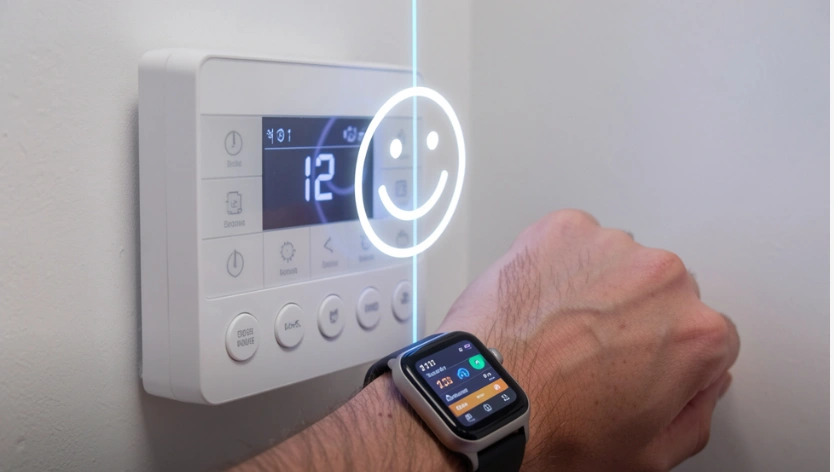
When a wearable connects to these systems through apps or automation platforms, it becomes both a sensor and a controller. For example, a smartwatch can detect when someone arrives home and automatically trigger a welcome routine. Lights switch on in the hallway, the thermostat adjusts temperature, and the front door unlocks.
This type of automation removes friction from daily routines while creating a home that feels responsive and intuitive.
Technologies That Make Wearable Smart Homes Possible
Behind the scenes, several technologies make this integration possible.
Internet of Things Connectivity
Smart homes rely on networks of connected devices communicating with each other through WiFi or Bluetooth. Wearables act as nodes within this network, sharing information such as location or activity status. When the wearable sends a signal, connected devices respond according to predefined automation rules.
Smart Home Automation Platforms
Automation platforms bring different devices into one ecosystem. Popular platforms include Apple Home, Google Home, Samsung SmartThings, and open source systems such as Home Assistant. These platforms allow users to create routines triggered by wearable activity. A morning routine may include lights gradually brightening, blinds opening, and the coffee machine starting when the wearable alarm goes off.
Biometric Data Integration
Wearables offer something smartphones cannot provide continuously. They collect biometric data. Heart rate, sleep patterns, and activity levels can influence how the smart home environment behaves. If a wearable detects sleep mode, the home might dim lights, lower temperature, and silence notifications automatically.
Everyday Smart Home Tasks Controlled by Wearables
The real appeal of wearable integration lies in how effortlessly it fits into daily life.
Lighting Control
Lighting is one of the most common wearables smart home integration features connected to wearable devices. A smartwatch can turn lights on or off with a simple tap. Some automation systems go even further. Motion sensors combined with wearable location data allow lights to activate automatically when someone enters a room. Even brightness levels can adjust based on time of day or activity.
Climate Control
Smart thermostats already learn household routines. When paired with wearable devices, they gain even more context. If a wearable detects physical activity such as exercise, the system might reduce temperature slightly to maintain comfort. During sleep hours, the thermostat can automatically shift to cooler nighttime settings.
Home Security
Wearables are also becoming personal security keys. Door locks can unlock automatically when a recognized wearable approaches the house. If the wearer leaves the home, security systems can activate automatically. Notifications about unusual activity can also appear instantly on a smartwatch screen, allowing homeowners to respond quickly.
Energy Efficiency
Smart homes powered by wearable data can reduce unnecessary energy usage. Lights turn off when occupants leave the house. Heating systems reduce output during long absences. Appliances enter energy saving modes automatically. These small adjustments collectively reduce energy consumption while making homes more sustainable.
Read More: AI-powered wearable technology and predictive analytics
Wearable Devices That Work Seamlessly With Smart Homes
Many wearable devices now support smart home ecosystems. Some focus on convenience while others bring health and environmental awareness together.
Apple Watch Series 9
The Apple Watch Series 9 offers deep integration with Apple Home automation. Users can control lights, locks, cameras, and thermostats directly from their wrist. It also supports automation routines triggered by time, location, or activity.
Samsung Galaxy Watch 6
Samsung’s Galaxy Watch works closely with the SmartThings platform. It can control appliances, lighting, and security systems while providing health and fitness insights.
Google Pixel Watch 2
The Pixel Watch integrates with Google Home routines. Voice commands and smartwatch controls make it possible to manage connected home devices without reaching for a phone.
Garmin Venu 3
Garmin wearables focus heavily on health tracking but can connect with wearables smart home integration automation tools through third party integrations. This makes them appealing to fitness focused users who still want home automation capabilities.
Fitbit Charge 6
Fitbit trackers provide activity insights while also supporting Google ecosystem integrations. Smart home routines can be linked to daily habits such as sleep or exercise patterns.
Oura Ring Gen 3
The Oura Ring has gained popularity for its advanced sleep and recovery insights. When connected to automation platforms, its sleep data can trigger nighttime home routines such as dimming lights or lowering temperature.
Ultrahuman Ring Air
This lightweight smart ring focuses on metabolic health and recovery tracking. Its data can support wellness based smart home routines that adjust lighting or climate conditions for better sleep.
Ray Ban Meta Smart Glasses
These smart glasses introduce voice based control of connected devices. With built in assistants, users can interact with smart home systems without touching a screen.
Xreal Air AR Glasses
Augmented reality wearables like Xreal Air hint at the future of home interaction. Users can visualize smart home controls in a digital overlay environment.
Apple Vision Pro
Apple Vision Pro represents a new approach to spatial computing. While still early in adoption, its mixed reality interface could eventually allow users to manage entire smart home systems within a visual environment.
The Benefits of Wearable Controlled Homes
The growing popularity of wearables smart home integration is driven by several advantages.
Convenience
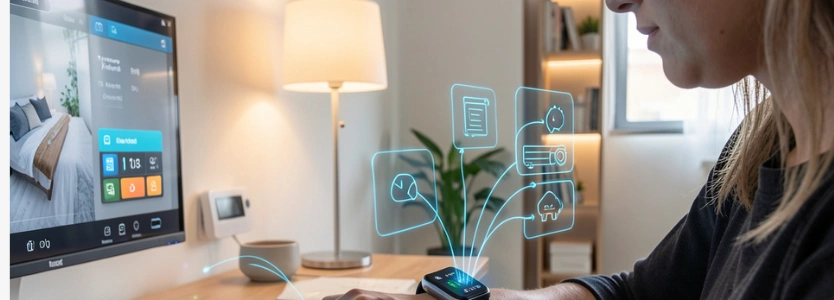
Controlling a home from a wearable removes the need to search for phones or open apps. Simple gestures or voice commands handle most tasks instantly.
Personalization
Wearables track personal habits and health data. This information allows smart homes to adapt to individual preferences and daily routines.
Security
Wearables act as personal authentication devices. Homes can recognize authorized users and grant access automatically.
Comfort and Wellness
Lighting, temperature, and environmental conditions can adapt to sleep cycles, stress levels, and activity patterns.
Challenges to Consider
Despite the advantages, wearable smart home integration still faces some challenges.
Compatibility Issues
Not all devices work with every platform. Consumers often need to choose ecosystems carefully to ensure compatibility between wearables and home automation systems.
Connectivity Limitations
Some users notice occasional delays when controlling devices through wearable apps. Network stability and device optimization continue improving each year.
Privacy Concerns
Because wearable devices collect health data and location information, security and data protection remain important considerations. Manufacturers are increasingly adding encryption and stronger privacy controls to address these concerns.
Read More: Future of AR Wearables
The Future of Wearables in Smart Homes
Wearable technology is evolving rapidly, and its relationship with smart homes will likely grow stronger. Artificial intelligence may soon analyze wearable health signals and automatically adjust environments for optimal comfort and productivity.
Augmented reality glasses could display interactive dashboards for controlling entire home systems visually. Biometric authentication through rings or watches may replace traditional keys and passwords. As wearable devices become more advanced, homes will increasingly respond to human behavior rather than waiting for commands. The result is a living environment that feels less like technology and more like an extension of daily life.
Final Thoughts
The relationship between wearable technology and smart homes is still evolving, yet the potential is already clear. A watch that unlocks doors, a ring that prepares a bedroom for sleep, or glasses that display home controls in augmented reality all represent the next phase of connected living.
Wearables smart home integration is transforming how people interact with technology. Instead of managing devices manually, homeowners simply move through their day while their environment adjusts around them. For anyone building a modern smart home, wearable technology may soon become the most natural and powerful control interface available.
FAQ Section
What is wearables smart home integration
Wearables smart home integration refers to the ability of wearable devices such as smartwatches, rings, or smart glasses to communicate with connected home systems and control devices like lights, thermostats, and security cameras.
Can a smartwatch control smart home devices
Yes. Many smartwatches can control smart home devices through apps connected to platforms such as Apple Home, Google Home, or Samsung SmartThings.
Do wearable devices improve home automation
Wearable devices enhance automation because they provide continuous data about location, activity, and health metrics that smart homes can use to trigger routines automatically.
Which wearable devices work best with smart homes
Popular options include Apple Watch Series 9, Samsung Galaxy Watch 6, Google Pixel Watch 2, Fitbit Charge 6, and Oura Ring Gen 3.
Do smart rings work with smart home systems
Some smart rings can connect with automation platforms and trigger routines based on sleep or activity data.
Is wearable smart home control secure
Security depends on the platform used. Most modern smart home ecosystems include encrypted connections and authentication features to protect user data.
Do you need a smart home hub for wearable integration
Many systems use a hub or automation platform such as Home Assistant or SmartThings to connect wearable devices with smart home technology.
[…] Read More: How Wearables Connect With Your Smart Home […]